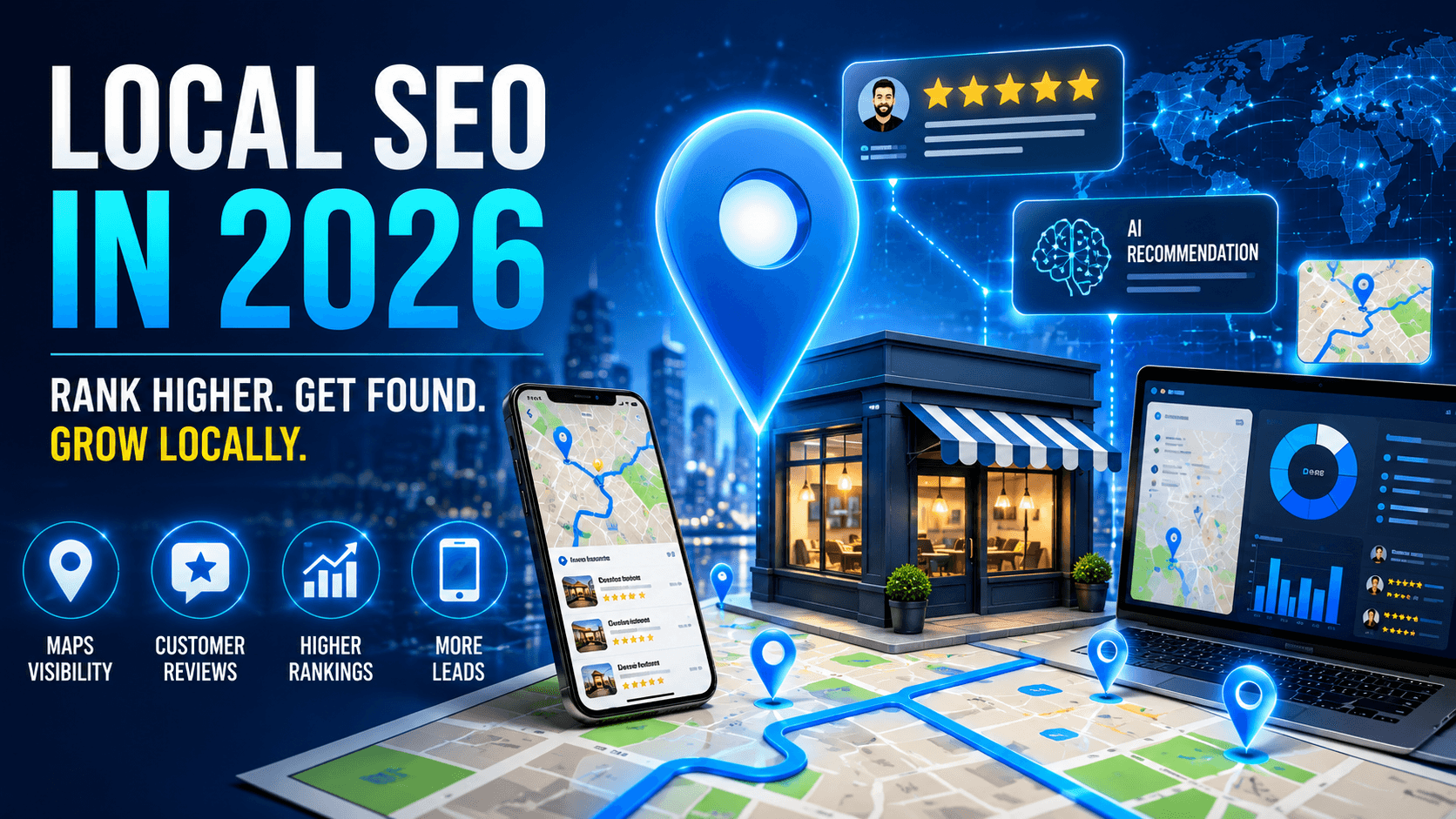
Local SEO in 2026: How Google Business Profile and AI Search Are Changing Customer Discovery
Google Maps, reviews and AI recommendations are changing how customers discover nearby businesses. Learn how to strengthen your local visibility in 2026.

When customers need a nearby service, they rarely begin by visiting individual business websites.
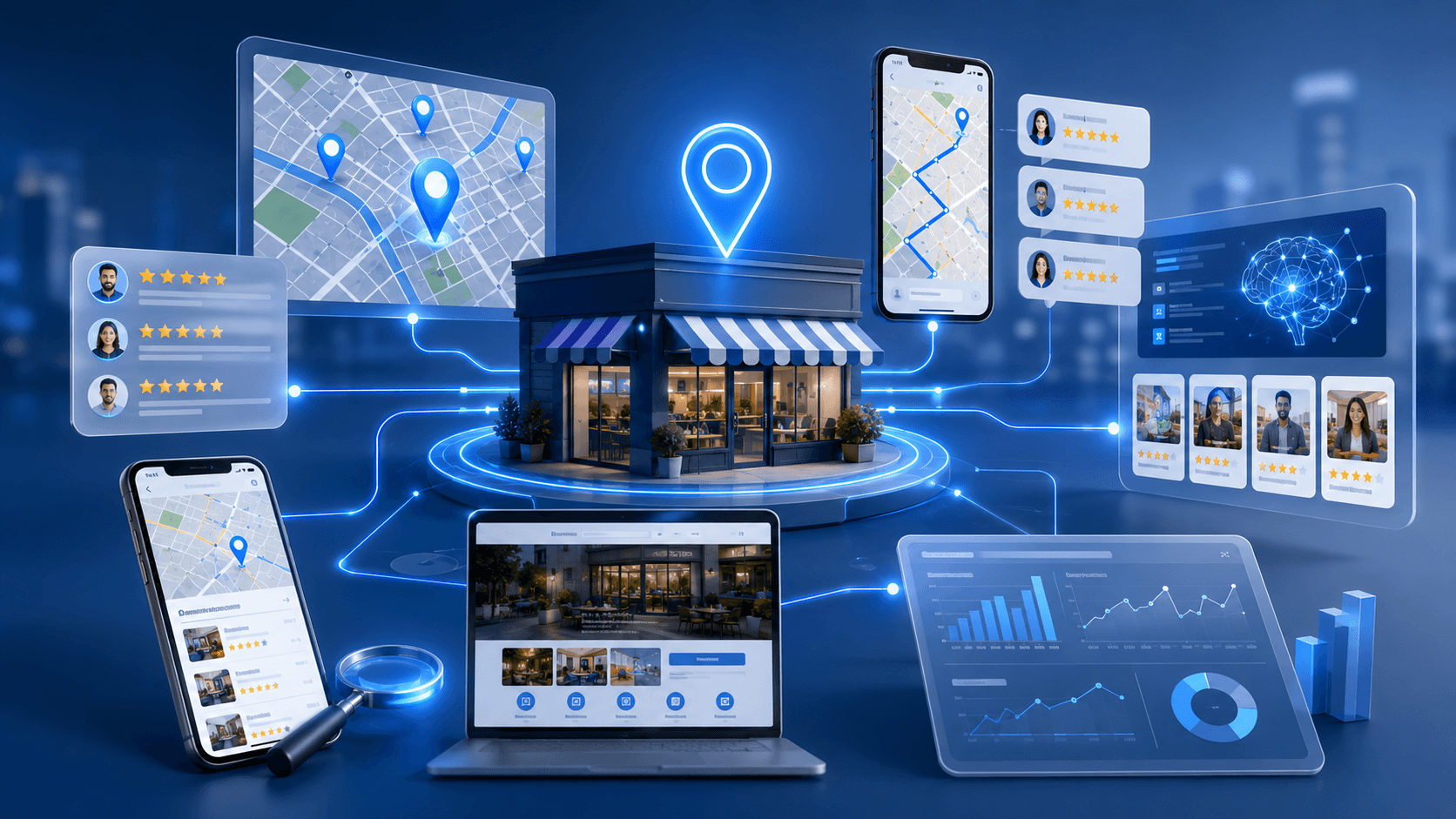
They search for a company on Google, open Google Maps, read customer reviews, compare opening hours and check how close each business is to their location. Increasingly, they may also ask an AI-powered search tool to recommend the best local provider for their specific needs.
This change means that a company’s digital presence is often responsible for creating the first impression before the customer visits its website, makes a phone call or walks through the door.
In 2026, local SEO is no longer limited to appearing for simple searches such as “restaurant near me” or “digital marketing agency in my city.” Customers are using longer and more specific questions that combine service, location, availability, reputation and personal requirements.
Businesses that maintain complete information, strong reviews, useful local content and technically optimized websites are more likely to remain visible throughout this changing customer journey.
At Arrowhead DigiTech, we help businesses improve their visibility across Google Search, Google Maps, business directories and emerging AI-powered discovery platforms.
What Is Local SEO?
Local SEO is the process of improving a business’s online presence so it can be discovered by people searching for services, products or locations within a particular geographical area.
It is especially important for:
- Healthcare and home-care providers
- Restaurants and retail stores
- Car rental companies
- Automotive repair businesses
- Construction and roofing companies
- Law firms and professional services
- Beauty clinics and salons
- Home service providers
- Multi-location businesses
- Local technology companies
Traditional SEO may help a website rank for general industry searches. Local SEO focuses more closely on connecting the business with customers in the areas it actually serves.
A successful local strategy combines Google Business Profile management, website optimization, customer reviews, location information, local content and consistent business details across online platforms.
Why Local Search Is Becoming More Important
Local search often happens when a customer is close to making a decision.
The person may already know what they need and may simply be choosing which company to contact, visit or book.
BrightLocal reports that 80% of US consumers search online for local businesses every week, while 32% conduct local business searches daily. It also reports that 46% of consumers frequently include “near me” in local searches.
This makes local visibility valuable because the audience usually has stronger commercial intent than someone conducting general informational research.
Recent local search performance data also shows the growing importance of Google Maps. Rio SEO reported that Maps views increased by 26.2% year over year during the first quarter of 2026. Driving-direction requests increased by 14.9%, indicating that many customers move directly from online discovery to an in-person action.
Businesses therefore need to optimize not only for website visits but also for calls, bookings, direction requests and profile interactions.
Google Business Profile Is More Than an Online Listing
A Google Business Profile can display important company information directly within Google Search and Maps.
Depending on the business type, customers may see:
- Business name
- Primary category
- Address or service area
- Telephone number
- Opening hours
- Website link
- Directions
- Photos and videos
- Customer reviews
- Products or services
- Booking options
- Questions and answers
- Business updates
Google states that complete and accurate information makes a business more likely to appear in relevant local search results. It also recommends verifying the profile, maintaining current opening hours, responding to reviews and adding useful photos and videos.
An incomplete or outdated profile can create uncertainty. Incorrect opening hours, old telephone numbers or inconsistent addresses may cause potential customers to choose another provider.
How Google Determines Local Rankings
Google explains that local results are mainly determined by three factors: relevance, distance and prominence.
Relevance
Relevance describes how closely the business matches what the customer is searching for.
A complete profile helps Google understand:
- What the company does
- Which services it offers
- What type of customers it serves
- Where it operates
- When it is available
Businesses should choose accurate primary and secondary categories and provide detailed information about their services.
Distance
Distance refers to how far the business is from the person conducting the search.
A company cannot directly control where the customer is located. However, it can provide accurate address or service-area information so Google can understand where the business operates.
Prominence
Prominence reflects how established and well-known a business appears.
Google says that prominence can be influenced by information such as website links, review quantity and review ratings. Well-known organizations and businesses with strong online authority may have an advantage in relevant local searches.
This is why local SEO requires more than repeatedly adding location keywords to a profile. It depends on a broader digital presence that includes reputation, website authority and accurate information.
How AI Is Changing Local Business Discovery
Customers are no longer using only traditional search results to compare nearby businesses.
They may ask an AI platform questions such as:
- Which home-care agency offers overnight care near me?
- What is the best car rental company near Dubai airport?
- Which local web development agency works with small businesses?
- Find a highly rated roofing company that offers emergency repairs.
- Which nearby beauty clinic has strong reviews and weekend appointments?
These questions contain more detail than traditional keyword searches.
AI-powered systems may evaluate business websites, review platforms, online directories, local listings and other trusted sources before producing recommendations.
BrightLocal’s 2026 research reports that 45% of consumers use ChatGPT or other generative AI tools for local business recommendations. It also found that less than half of businesses leading in Google local search results appear in AI-generated local recommendations.
This suggests that ranking well in Google Maps does not automatically guarantee visibility across every AI platform.
Businesses now need information that is accurate, consistent and understandable across multiple digital sources.
Why Accurate Business Information Matters
AI tools and search engines may compare information from several platforms.
If the website displays one telephone number while Google Business Profile displays another, it creates uncertainty. The same problem occurs when addresses, business hours, company names or services are inconsistent.
BrightLocal reports that 62% of consumers would avoid a company after finding incorrect business information online. Its current statistics also indicate that only 68% of contact details presented by ChatGPT and Perplexity match the corresponding Google Business Profile information.
Businesses should regularly review their information across:
- Official website
- Google Business Profile
- Industry directories
- Review websites
- Local business directories
- Appointment platforms
- Maps services
The company name, address and telephone number should remain consistent wherever possible.
Reviews Are a Major Part of Local Visibility
Customer reviews help people evaluate quality, reliability and trustworthiness.
BrightLocal reports that 97% of consumers read reviews for local businesses and that 71% use Google when reading local business reviews. It also found that 54% visit a company’s website after seeing positive reviews.
Reviews can influence whether a customer:
- Visits the website
- Calls the company
- Requests directions
- Books an appointment
- Compares another provider
- Trusts the business
Companies should develop an ethical process for requesting reviews from real customers.
They should never purchase fake reviews or ask employees to post misleading feedback. Artificial review activity can damage customer trust and may create platform-policy issues.
Why Businesses Should Respond to Reviews
Responding to reviews shows that the company values customer feedback.
Positive reviews provide an opportunity to thank customers and reinforce a professional brand image. Negative reviews provide an opportunity to acknowledge concerns, clarify misunderstandings and demonstrate responsible customer service.
Rio SEO’s consumer study found that 59% of surveyed consumers expected businesses to respond within 24 hours.
Businesses should avoid emotional or defensive responses. A professional reply should:
- Thank the customer for the feedback
- Acknowledge the concern
- Avoid sharing private customer information
- Explain the next appropriate step
- Move complex discussions to a private channel
Review responses are public and may be read by many future customers, not only the person who originally posted the review.
Your Website Still Matters for Local SEO
A Google Business Profile should support the website, not replace it.
A professional website allows the business to explain its services, demonstrate experience, answer customer questions and convert visitors into leads.
BrightLocal’s data indicates that business websites account for 47% of the first ten organic results shown for local searches. It also reports that dedicated service pages, geographically relevant content and authoritative backlinks are important factors for local organic visibility.
A locally optimized website should contain:
- Clear service pages
- Accurate contact details
- Mobile-friendly design
- Fast loading speed
- Location or service-area information
- Customer-focused content
- Easy contact options
- Secure HTTPS connection
- Relevant page titles and descriptions
- Consistent branding
A visitor arriving from Google Maps should immediately understand what the company offers and how to contact it.
Create a Dedicated Page for Each Major Service
One general services page may not provide enough detail for customers or search engines.
A company offering several services should create a dedicated page for each important offering.
For example, a home-care company may need separate pages for:
- Companion care
- Dementia care
- Overnight care
- Respite care
- Hospital-to-home care
- Veteran care
Each page should explain:
- What the service includes
- Who may benefit from it
- Where it is available
- How the process works
- Why customers should choose the company
- How to request more information
Service pages should be written for real customers rather than created only to repeat keywords.
Build Useful Location Pages
Businesses serving multiple cities or regions may benefit from dedicated location pages.
However, each page should contain genuinely useful local information.
Changing only the city name while repeating the same content across dozens of pages creates a poor experience and provides limited value.
A useful location page may include:
- Services available in that area
- Local contact information
- Business hours
- Nearby service coverage
- Customer testimonials
- Relevant photographs
- Frequently asked local questions
- Clear directions or appointment information
The content should accurately represent the company’s presence and ability to serve customers in that location.
Use Local Business Structured Data
Structured data helps search engines better understand the information presented on a website.
Google’s LocalBusiness structured-data documentation explains that businesses can provide machine-readable details such as operating hours, location, departments, telephone numbers and other business information. Google may use this information when displaying business details in Search and Maps.
Local business schema may include:
- Business name
- Address
- Telephone number
- Website address
- Opening hours
- Geographic coordinates
- Business type
- Images
- Service details
Structured data does not guarantee higher rankings or special search features. It should accurately match the visible information on the website and be tested before implementation.
Add High-Quality Photos and Videos
Customers often want to see the business before contacting it.
Useful profile media may include:
- Exterior building photographs
- Office or store interior
- Team members at work
- Products
- Equipment
- Service process
- Completed projects
- Customer-accessible areas
Images should be clear, realistic and relevant to the actual company.
Google specifically recommends adding photos and videos to show customers what the business offers and communicate its story.
Stock images can support website design, but business profiles are stronger when they also contain authentic photographs of the organization.
Publish Google Business Profile Updates
Regular updates can help keep the profile active and useful to customers.
Businesses can publish information about:
- New services
- Special operating hours
- Company announcements
- Seasonal offers
- Events
- Recent projects
- Hiring updates
- Educational information
Posts should remain professional, accurate and connected to a clear customer action.
The goal is not to publish content simply to appear active. Each update should help the customer understand the company or take the next step.
Optimize for Mobile Customers
Many local searches occur while customers are travelling, comparing nearby businesses or preparing to make a call.
The website should work properly on smartphones and tablets.
Mobile users should be able to:
- Read service information
- Tap the phone number
- Open directions
- Submit a short contact form
- Request an appointment
- View opening hours
- Navigate without zooming
- Load pages quickly
A complicated mobile experience can cause a customer to return to the search results and select another company.
Common Local SEO Mistakes
Leaving the Profile Incomplete
Missing categories, services, hours or contact details make it harder for customers and search engines to understand the business.
Using Inconsistent Information
Different addresses, telephone numbers or company names across platforms can create confusion.
Ignoring Reviews
Failing to request, monitor or respond to reviews can weaken customer confidence.
Creating Duplicate Profiles
Unnecessary duplicate listings may confuse customers and divide reviews between multiple profiles.
Using Misleading Business Information
Businesses should not create fake locations or claim service areas they do not actually cover.
Depending Only on Google Business Profile
The profile works best when supported by a professional website, useful content and consistent information across trusted platforms.
Focusing Only on Rankings
High rankings have limited value if the listing receives no calls, website visits, bookings or direction requests.
How Local SEO Performance Should Be Measured
Businesses should monitor outcomes rather than relying only on a single keyword ranking.
Useful measurements include:
- Google Maps views
- Search views
- Website clicks
- Telephone calls
- Direction requests
- Booking actions
- Contact-form submissions
- Review growth
- Average rating
- Local organic traffic
- Leads by location
- Conversion rate
Local visibility can vary based on customer location, competition, search intent and time. Performance should therefore be evaluated over a reasonable period rather than through one manual search.
What Arrowhead DigiTech Is Doing
At Arrowhead DigiTech, we help businesses create a complete and consistent local digital presence.
Our local SEO services include:
Google Business Profile Optimization
We review and improve business categories, descriptions, services, hours, contact information, photographs and other profile elements.
Business Information Management
We help maintain consistent company details across websites, profiles and relevant directories.
Local Keyword Research
We identify the services, customer questions and geographical terms that are relevant to the business.
Website and Service-Page Optimization
We develop and optimize clear pages for individual services, locations and customer needs.
Review Strategy and Reputation Support
We help businesses develop professional processes for requesting feedback, monitoring reviews and responding appropriately.
Local Content Creation
We create useful website and profile content connected to the company’s services and locations.
Technical SEO and Structured Data
We improve website accessibility, indexing, metadata, mobile performance and appropriate LocalBusiness structured data.
Performance Monitoring
We track visibility, traffic, profile interactions and lead-generating actions to understand what is producing measurable results.
Our objective is not simply to increase profile views. We work to turn local visibility into calls, inquiries, appointments and long-term customers.
Building Visibility Across Search, Maps and AI Platforms
Customer discovery is becoming more distributed.
A potential customer may first encounter a business through Google Maps, verify its reputation through reviews, explore its services on the website and later ask an AI tool to compare it with competitors.
Every part of the online presence should communicate the same accurate and trustworthy information.
Businesses that maintain strong websites, complete profiles, real reviews, useful content and consistent information will be better prepared for both traditional local search and AI-powered recommendations.
Final Thoughts
Local SEO remains one of the most valuable digital marketing strategies for businesses serving specific geographical areas.
Google Business Profile, Google Maps, reviews, service pages and local content all influence how customers discover and evaluate a company.
AI is adding another layer to this process by gathering information from multiple sources and presenting personalized recommendations.
Businesses should not depend on shortcuts or temporary ranking techniques. Long-term local visibility comes from accurate information, strong customer experiences, useful content, technical quality and a trusted reputation.
Arrowhead DigiTech helps businesses strengthen each of these areas through professional local SEO, Google Business Profile management, website development, reputation support and digital marketing.
In 2026, being physically close to a customer is not enough. The business must also be visible, understandable and trustworthy wherever that customer searches.
Frequently Asked Questions
What is Google Business Profile optimization?
Google Business Profile optimization involves improving a company’s categories, contact information, services, hours, description, photographs, reviews and other profile details to make the listing accurate and useful.
What factors affect Google local rankings?
Google says local results are mainly influenced by relevance, distance and prominence. Complete information, reviews, website authority and accurate location details can support local visibility.
Are Google reviews important for local SEO?
Yes. Reviews influence customer trust and may contribute to a business’s local prominence. Businesses should request honest reviews and respond professionally.
Can a business rank locally without a website?
A company may appear through its Google Business Profile, but a professional website provides service details, builds trust and creates more opportunities to generate leads.
How is AI affecting local search?
AI tools can compare websites, listings, reviews and directory information when recommending local businesses. Companies therefore need accurate and consistent information across multiple platforms.
How can Arrowhead DigiTech help?
Arrowhead DigiTech provides Google Business Profile optimization, local SEO, website development, service and location pages, reputation support, structured data and performance monitoring.