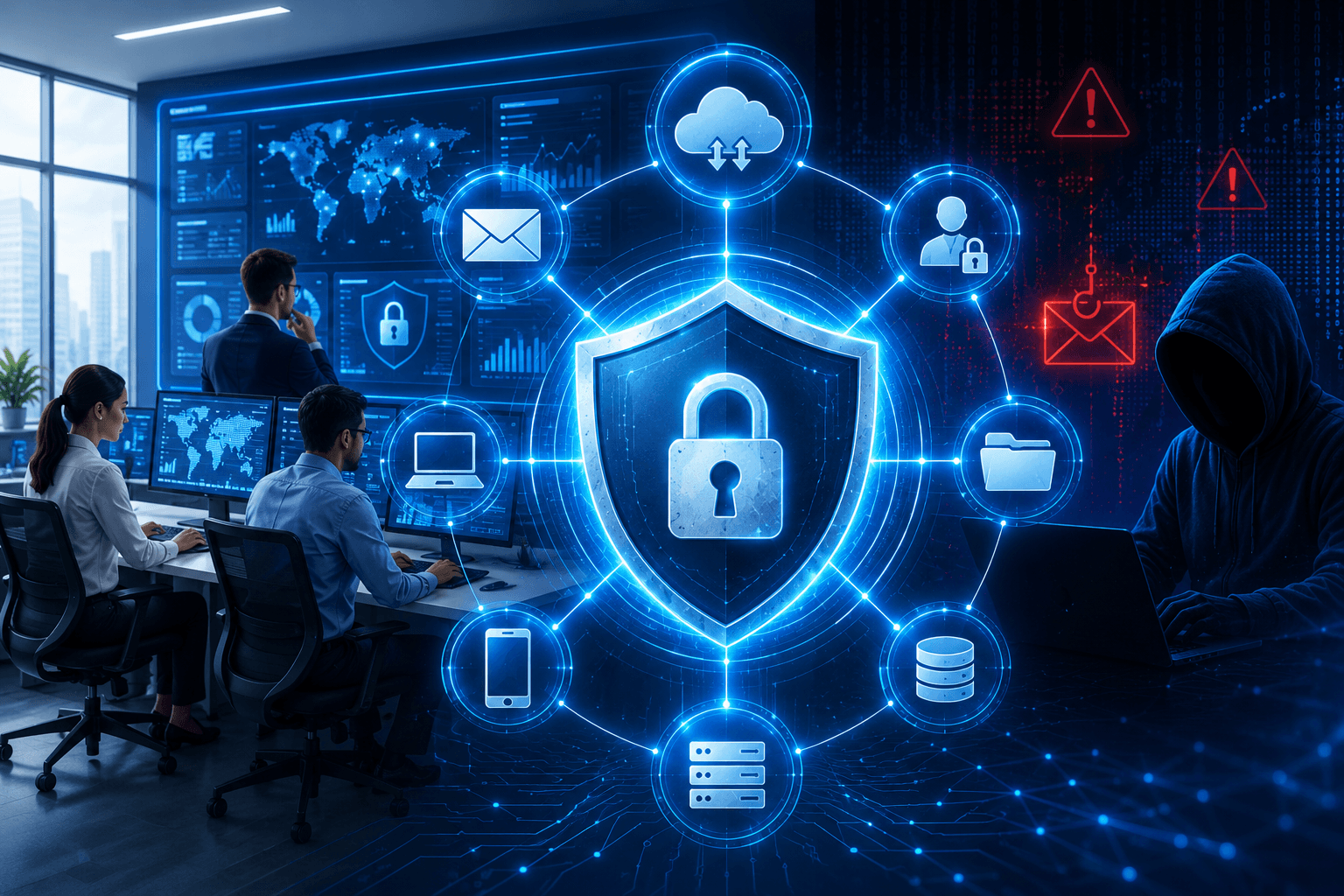
AI-Powered Cyber Threats in 2026: A Small Business Security Guide
Learn how AI-powered cyber threats are affecting small businesses in 2026 and discover practical ways to protect data, systems, and customer trust.
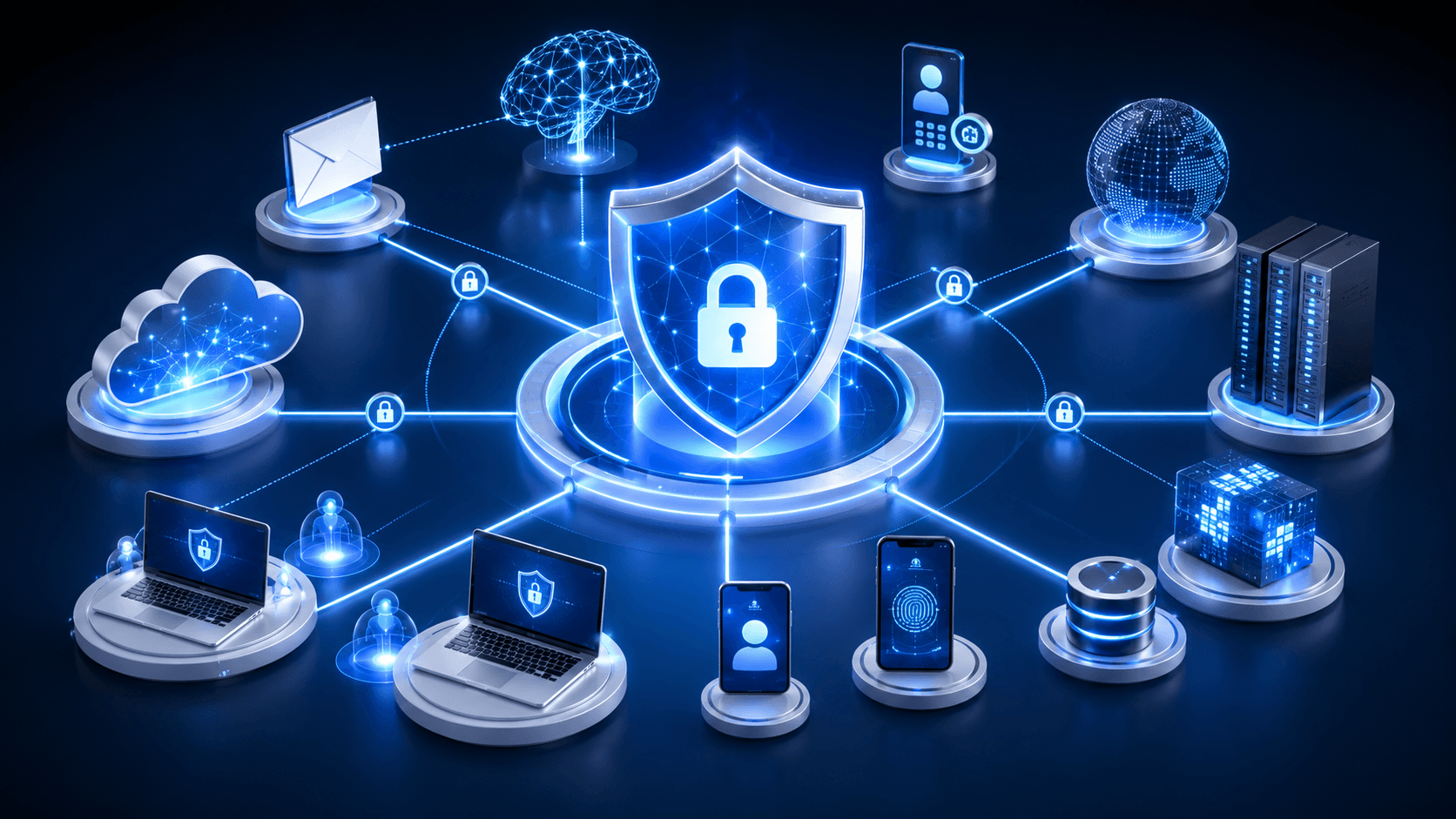
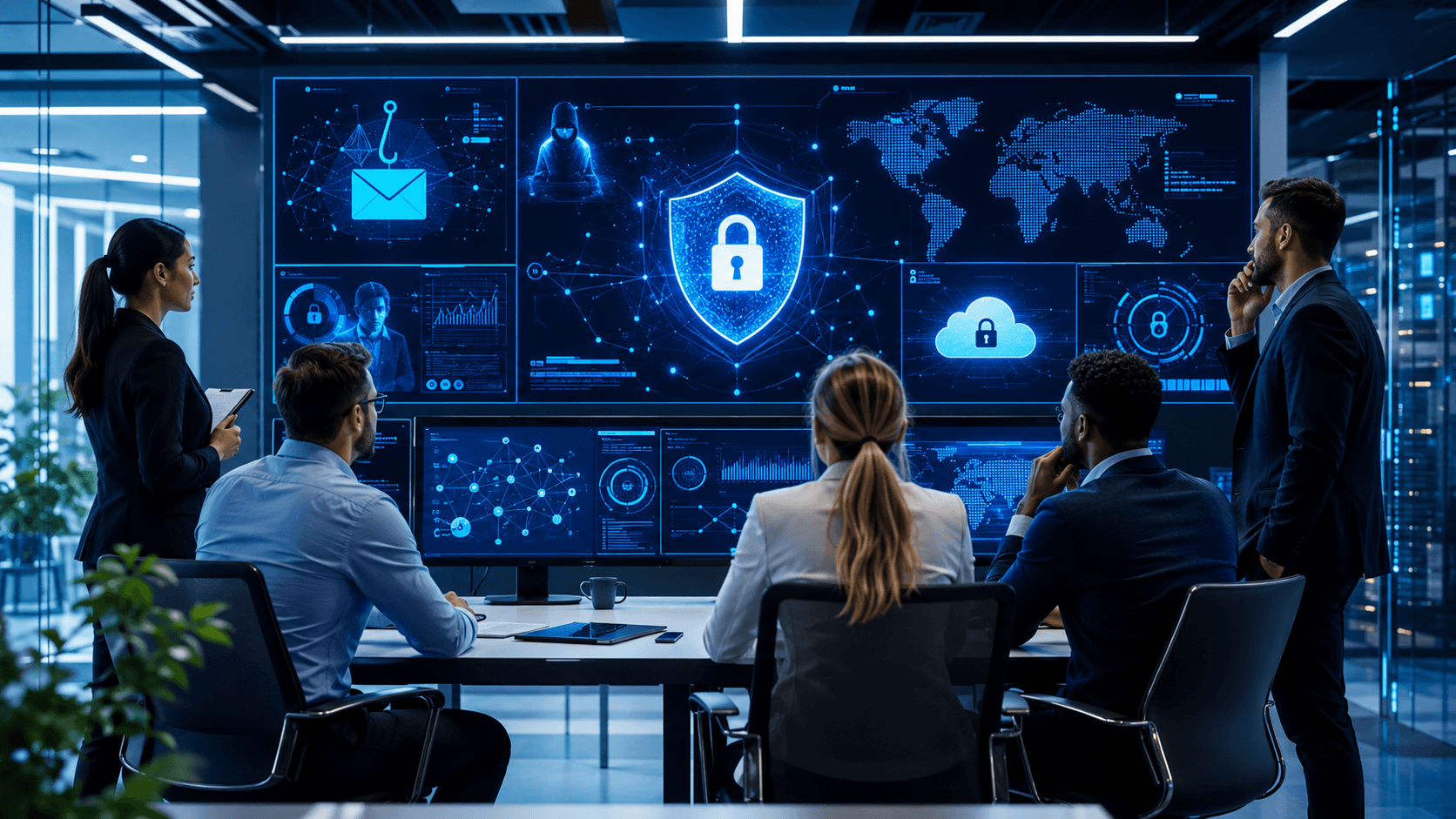
Artificial intelligence is helping businesses automate operations, improve customer service, analyze data and increase productivity. At the same time, it is also changing the cybersecurity threat landscape.
Cybercriminals can now use AI to produce convincing phishing emails, imitate professional communication, automate fraudulent campaigns and target large numbers of businesses more efficiently.
For small and growing companies, this creates a serious challenge. Many businesses depend on email, cloud software, online payments, customer databases and remote access, but do not have a dedicated cybersecurity department monitoring these systems around the clock.
In 2026, cybersecurity can no longer be treated only as a technical issue. It is a business continuity, financial stability and customer trust issue.
The World Economic Forum’s Global Cybersecurity Outlook 2026 found that 87% of respondents reported an increase in AI-related vulnerabilities during 2025. It also reported that 94% of business and security leaders expect AI to be the most consequential force shaping cybersecurity in 2026.
At Arrowhead DigiTech, we are helping businesses strengthen their digital foundations through secure systems, employee awareness, network protection, cloud backup and ongoing IT support.
How AI Is Changing Cybercrime
Traditional phishing emails were often easier to identify. They commonly contained spelling errors, unnatural language, suspicious formatting or generic messages.
AI-generated attacks can be far more convincing.
Attackers can use information collected from company websites, social media profiles, online directories and public business records to create personalized messages. These emails may appear to come from a manager, supplier, customer, bank or trusted software provider.
Microsoft reported in May 2026 that AI-automated phishing can be 4.5 times more effective than traditional cyberattacks. The company also noted that attackers are increasingly using AI to automate phishing, generate believable scams and adapt malicious software more quickly.
This means employees can no longer depend only on poor grammar or unusual wording to identify dangerous messages.
A fraudulent email may now use the correct company name, professional language, realistic branding and information that appears relevant to the recipient’s job.
Why Small Businesses Are Attractive Targets
Some business owners assume cybercriminals are interested only in large corporations. In reality, smaller businesses can be attractive targets because they may have valuable information but fewer security resources.
A small business may store:
- Customer names and contact details
- Employee information
- Payment records
- Banking and invoice details
- Business contracts
- Login credentials
- Confidential project files
- Intellectual property
Smaller organizations may also use the same passwords across multiple platforms, rely on basic email protection, postpone software updates or provide more employees with access than necessary.
The World Economic Forum reported that smaller organizations are twice as likely as large companies to describe their cyber resilience as insufficient. Resource limitations, skills shortages and complex third-party technology relationships can make these organizations more exposed.
Attackers understand these weaknesses. They do not always need to target the largest company when they can find a less-protected organization connected to valuable data, customers or supply chains.
The Most Important Cyber Threats in 2026
AI-Generated Phishing
Phishing remains one of the most common ways attackers attempt to steal passwords, financial details and sensitive business information.
AI allows criminals to produce large numbers of personalized messages without the obvious mistakes associated with older scams.
A phishing email may ask an employee to:
- Sign in to a fake account page
- Review a document
- Confirm payment information
- Reset a password
- Open a shared file
- Pay an urgent invoice
- Update banking details
Barracuda’s 2026 Email Threats Report analyzed more than 3.1 billion emails from January 2026. It found that one in three messages was malicious or unwanted spam and that phishing represented 48% of malicious email activity.
Business Email Compromise
Business email compromise occurs when criminals impersonate executives, suppliers, employees or business partners.
The attacker may request a payment, change invoice instructions or ask for confidential information. Because these messages may contain no traditional malware, basic security filters may not always detect them.
Businesses should verify unusual payment requests through a separate communication method, particularly when banking information or invoice details have changed.
Account Takeovers
An account takeover occurs when an unauthorized person gains access to an employee’s email, cloud service or business account.
Once inside, the attacker may study previous conversations, send believable messages, reset passwords or target other employees and customers.
Barracuda reported that 34% of companies experience at least one account takeover incident every month.
Strong identity security is therefore just as important as antivirus software.
Ransomware
Ransomware can lock business files or systems and disrupt normal operations. Even when a company maintains copies of its data, recovery can be difficult if the backups are outdated, untested or connected to the infected network.
The financial impact may include operational downtime, recovery expenses, lost sales and reputational damage.
Shadow AI and Data Leakage
Employees are increasingly using public AI tools for writing, research, analysis and productivity. These tools can create business value, but they may also introduce risk when workers enter confidential information without approval.
Sensitive customer information, internal documents, passwords, source code or financial data should not be entered into unapproved AI platforms.
IBM’s 2025 Cost of a Data Breach research found that one in five organizations studied experienced a breach linked to shadow AI. It also reported that 63% of breached organizations either had no AI governance policy or were still developing one.
Businesses therefore need clear rules explaining which AI tools employees may use and what information must remain private.
The Real Cost of a Cybersecurity Incident
The impact of a security incident is not limited to the cost of repairing a computer.
A breach can affect:
- Daily operations
- Customer confidence
- Employee productivity
- Business relationships
- Regulatory compliance
- Financial stability
- Online reputation
IBM reported that the global average cost of a data breach was $4.44 million in its 2025 study, while the average cost in the United States reached $10.22 million. The research also found that nearly all studied organizations experienced some form of operational disruption following a breach.
A small company may not experience costs at the same scale as a global organization. However, it may also have fewer financial resources available for recovery.
Even a short interruption can prevent employees from accessing files, responding to customers, processing orders or completing payments.
Cybersecurity Steps Businesses Should Take Now
Use Multifactor Authentication
Multifactor authentication adds another verification step after a password is entered.
It should be enabled for:
- Business email
- Cloud storage
- Accounting platforms
- Website administration
- Customer relationship management systems
- Social media accounts
- Banking and payment systems
Where available, businesses should consider stronger phishing-resistant authentication methods instead of relying only on text-message codes.
Protect Email and Business Identities
Email protection should include more than spam filtering.
Businesses should implement identity monitoring, suspicious login alerts, sender authentication and controls that detect impersonation attempts.
Employees should be trained to inspect sender addresses, links and unexpected attachments before taking action.
Keep Software and Devices Updated
Outdated operating systems, plugins, applications and website software may contain known vulnerabilities.
Businesses should establish a regular update process covering:
- Employee computers
- Mobile devices
- Website platforms
- WordPress plugins
- Network equipment
- Business applications
- Security software
Updates should be installed from official sources and tested when they affect critical business systems.
Back Up Important Business Data
Critical files should be backed up automatically and stored securely.
A strong backup strategy should include:
- Regular automated backups
- Encrypted storage
- Copies separated from the main network
- Restricted access
- Routine recovery testing
Barracuda recommends encrypted, secure and regularly tested backups to help businesses recover from email-related fraud, ransomware and unauthorized access.
A backup that has never been tested should not be assumed to work during an emergency.
Limit Employee Access
Not every employee needs access to every system or file.
Businesses should follow the principle of least privilege, meaning users receive only the access required for their roles.
Accounts belonging to former employees should be disabled immediately. Administrative permissions should be limited and reviewed regularly.
Train Employees Continuously
Employees are an essential part of business security.
Training should cover:
- Phishing identification
- Suspicious links
- Payment verification
- Password security
- Safe AI use
- Social engineering
- Reporting unusual activity
Training should not be limited to a single annual presentation. Short, regular reminders and realistic examples can help employees recognize changing tactics.
Create an Incident Response Plan
Businesses should decide in advance what will happen when a security incident occurs.
The plan should identify:
- Who employees must contact
- Which systems should be disconnected
- How passwords will be reset
- Where secure backups are stored
- Who will communicate with customers
- Which technology partners will assist
- How the incident will be documented
A clear plan can reduce confusion and help the company respond more quickly.
AI Can Also Strengthen Cybersecurity
AI is not only being used by attackers. It can also help businesses improve protection.
Security systems can use AI and automation to identify unusual activity, analyze suspicious messages, detect login anomalies and respond to threats more quickly.
IBM found that organizations using AI and automation extensively in their security operations saved an average of $1.9 million in breach costs and reduced their breach lifecycle by an average of 80 days.
The goal should not be to trust automation without human oversight. Businesses need a combination of:
- Intelligent monitoring
- Clear security policies
- Trained employees
- Reliable backups
- Professional IT support
- Regular system reviews
Technology works best when it supports a well-organized cybersecurity strategy.
What Arrowhead DigiTech Is Doing
At Arrowhead DigiTech, we help businesses improve security without creating unnecessary technical complexity.
Our cybersecurity and IT support approach includes:
Security and Risk Assessments
We review business systems, websites, accounts and digital workflows to identify weaknesses that may expose important information.
Network and Device Protection
We help businesses maintain secure networks, updated systems and properly configured business devices.
Cloud and Data Backup
We support structured backup solutions designed to protect critical files and improve recovery readiness.
Website Security
We help secure websites through software updates, access controls, performance monitoring and ongoing maintenance.
Account and Access Management
We assist businesses in strengthening passwords, implementing multifactor authentication and limiting unnecessary access.
Employee Security Awareness
We help teams understand phishing, account takeover attempts, payment fraud and responsible use of AI tools.
Ongoing IT Support
Cybersecurity is not a one-time installation. We provide ongoing technical support to help businesses resolve issues, maintain systems and respond to changing risks.
Our objective is to help companies operate confidently while protecting their customers, employees and digital assets.
Building a Security-First Business Culture
Cybersecurity becomes stronger when it is part of everyday business operations.
Employees should feel comfortable reporting suspicious messages without fear of blame. Managers should verify unusual requests, and business owners should treat updates, backups and access reviews as routine responsibilities.
A security-first culture does not require every employee to become a cybersecurity expert.
It requires clear procedures, reliable tools and consistent awareness.
The most successful security strategy is often not the most complicated one. It is the strategy that the organization follows every day.
Final Thoughts
AI is creating valuable opportunities for businesses, but it is also enabling faster, more personalized and more convincing cyber threats.
In 2026, small businesses need more than basic antivirus software. They need strong identity protection, secure email, reliable backups, updated systems, employee awareness and a clear incident response plan.
Cybersecurity should be viewed as an investment in business continuity and customer trust.
Arrowhead DigiTech helps businesses strengthen their technology infrastructure through cybersecurity support, website protection, cloud solutions, backup planning and ongoing IT services.
The companies that prepare today will be in a stronger position to manage future threats, protect their reputation and continue growing in an increasingly AI-powered world.
Frequently Asked Questions
Why are small businesses targeted by cybercriminals?
Small businesses may store valuable customer and financial information while having fewer security resources than large organizations. Attackers may view them as easier entry points.
Can AI make phishing emails more convincing?
Yes. AI can generate professional, personalized messages that imitate business communication and contain fewer traditional warning signs.
What is the most important cybersecurity step for a small business?
No single step provides complete protection. Businesses should begin with multifactor authentication, secure backups, software updates, employee training and restricted account access.
How often should business data be backed up?
The schedule depends on how frequently the company’s data changes. Critical information should be backed up automatically and recovery should be tested regularly.
What is shadow AI?
Shadow AI is the use of AI applications without official business approval or oversight. It can expose confidential information when employees enter sensitive data into unapproved platforms.
How can Arrowhead DigiTech help protect a business?
Arrowhead DigiTech provides cybersecurity assessments, network protection, backup support, website security, account management, employee awareness and ongoing IT assistance.