
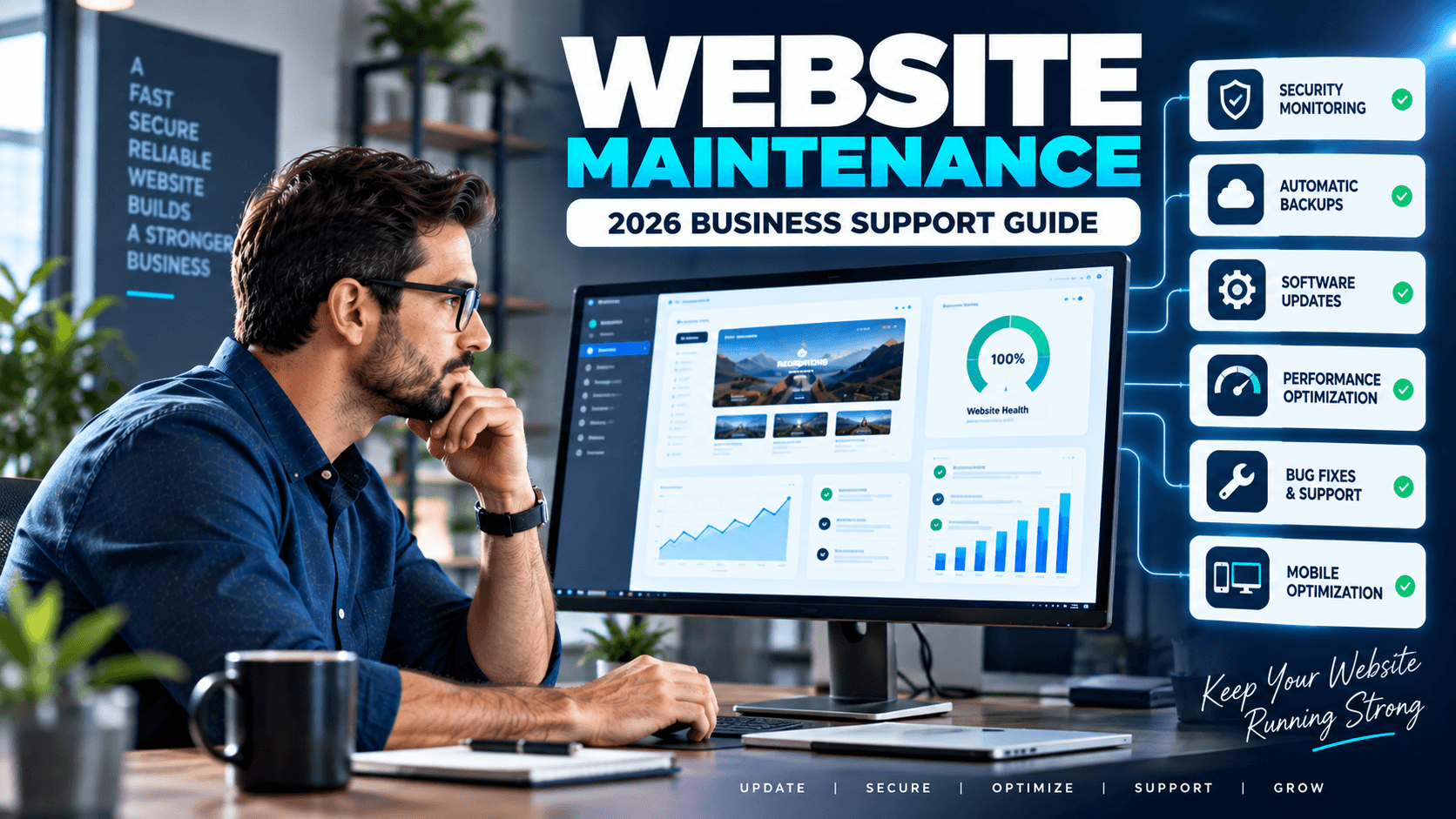
Website Maintenance in 2026: Why Businesses Need Ongoing Website Support
Launching a website is only the beginning. Regular website maintenance helps businesses keep their websites secure, updated, fast and reliable while providing customers with a better online experience.


A business website is never truly “finished.”
After launch, websites need regular updates, security checks, performance improvements and technical attention. Without ongoing maintenance, even a professionally designed website can gradually become slower, outdated or vulnerable to technical problems.
This is why website maintenance services have become an important part of managing a successful online business in 2026.
A well-maintained website doesn't just look professional. It should remain secure, functional, fast and reliable for customers.
What Is Website Maintenance?
Website maintenance is the ongoing process of monitoring, updating and improving a website after it has been launched.
Depending on the website, maintenance may include:
- Software and plugin updates
- Security monitoring
- Website backups
- Broken-link checks
- Performance monitoring
- Bug fixes
- Content updates
- Mobile responsiveness checks
- Database maintenance
- Technical troubleshooting
The exact requirements depend on the technology and complexity of the website.
Why Website Maintenance Matters in 2026
Websites depend on multiple technologies working together.
A content management system, plugins, themes, integrations, databases and third-party services may all require updates over time.
If these components are ignored, compatibility issues and technical problems can develop.
Regular maintenance helps businesses identify problems before they become bigger disruptions.
Keep Your Website Secure
Security should be an ongoing priority.
Outdated software and poorly maintained website components can create unnecessary security risks.
Regular updates, backups, monitoring and appropriate security practices can help businesses maintain a stronger security posture.
For businesses that collect customer information or process transactions, maintaining the website becomes even more important.
Improve Website Performance
Customers don't want to wait for a slow website.
Large media files, outdated plugins, unnecessary scripts and technical issues can affect website performance.
Ongoing maintenance provides an opportunity to identify performance problems and optimize the website as the business grows.
A faster, smoother website can also create a better experience for mobile visitors.
Prevent Unexpected Downtime
Imagine a potential customer visiting your website and finding a broken page, error message or unavailable service.
That can damage the customer experience and potentially result in lost opportunities.
Regular monitoring can help businesses detect technical problems earlier and address them before they create extended disruptions.
Keep Content Up to Date
Website maintenance isn't only technical.
Business information changes constantly.
Prices, services, contact information, team members, promotions and other content may need regular updates.
An outdated website can make a business appear inactive or unreliable.
Keeping important information current helps visitors find accurate information when they need it.
Mobile Experience Matters
A large portion of website traffic can come from mobile devices.
That's why businesses should regularly check how their websites perform across different screen sizes and devices.
Maintenance should include reviewing:
- Mobile navigation
- Buttons and forms
- Images
- Page layouts
- Text readability
- Checkout or booking processes
A website that works well on desktop but creates problems on mobile can lose valuable customers.
Backups Are Essential
Backups provide an important layer of protection.
If something goes wrong because of a technical failure, security incident or incompatible update, a reliable backup can help restore the website.
Businesses should have an appropriate backup strategy based on the importance and frequency of website changes.
Website Maintenance Saves Time and Money
Ignoring small website problems can allow them to become larger problems.
A broken feature that could have been fixed quickly may eventually affect multiple pages or customer processes.
Regular maintenance focuses on prevention rather than emergency repairs.
For businesses, this can make website management more predictable and reduce unnecessary technical interruptions.
What Should a Website Maintenance Plan Include?
A professional maintenance plan can include several levels of support.
Basic Maintenance
Regular updates, backups and technical checks.
Security & Performance
Security monitoring, performance reviews and technical optimization.
Ongoing Website Support
Content changes, troubleshooting, bug fixes and technical assistance as needed.
Continuous Improvement
Regular analysis and improvements based on business goals, user behavior and website performance.
The right plan depends on the size, technology and needs of the business.
How Often Should a Website Be Maintained?
There isn't one maintenance schedule that works for every website.
A simple informational website may have different requirements from an e-commerce store or a website with multiple integrations.
The important point is to establish a consistent maintenance process rather than waiting until something breaks.
Final Thoughts
Your website is one of your most important digital business assets.
Launching it is only the first step.
With regular website maintenance and support, businesses can keep their websites secure, updated, functional and ready to serve customers.
In 2026, website management should not be treated as an occasional technical task.
It should be part of an ongoing digital strategy focused on reliability, performance and customer experience.
FAQs
What are website maintenance services?
Website maintenance services involve ongoing updates, security checks, backups, performance monitoring, troubleshooting and other activities needed to keep a website functioning properly.
Why does a business need website maintenance?
Regular maintenance helps businesses keep their websites secure, updated, reliable and easier for customers to use.
How often should a website be maintained?
Maintenance frequency depends on the website's technology, complexity and update requirements. Regular monitoring is generally preferable to waiting for problems.
Does website maintenance improve security?
Regular updates, backups and security monitoring can help reduce certain technical and security risks.
Can website maintenance improve performance?
Yes. Ongoing maintenance can identify technical issues, unnecessary resources and other factors that may affect website performance.