Social Media Marketing in 2026: How Businesses Can Build a Stronger Online Presence
Social media is no longer just a place to post updates. Learn how businesses can build a practical social media strategy in 2026 to increase visibility, engage customers and generate more opportunities.
Social media has become an important part of how businesses communicate with customers.
People use social platforms to discover brands, research products, ask questions, watch videos and decide which businesses they want to trust.
For businesses, this creates an opportunity to connect with potential customers before they are ready to make a purchase.
But simply creating social media accounts and posting occasionally is not enough.
In 2026, businesses need a clear social media marketing strategy that combines useful content, consistent branding, audience engagement and measurable business goals.
At Arrowhead DigiTech, we help businesses develop digital marketing strategies that connect social media activity with real business objectives.
What Is Social Media Marketing?
Social media marketing is the use of social platforms to promote a business, communicate with customers and build an online presence.
Businesses can use social media to:
- Increase brand awareness
- Promote products and services
- Generate leads
- Educate customers
- Build trust
- Drive website traffic
- Support sales
- Communicate with existing customers
The most effective strategies focus on providing value rather than simply promoting a business in every post.
Why Social Media Matters for Businesses
Customers often encounter businesses across multiple digital channels before making a decision.
Someone may:
- Discover a company through social media.
- Visit its website.
- Read reviews.
- Watch videos.
- Compare competitors.
- Contact the business.
Social media can therefore become an important part of the customer journey.
A strong presence can help a business remain visible while potential customers are researching their options.
Choose the Right Platforms
Businesses do not need to be active on every social media platform.
The better approach is to identify where the target audience actually spends time.
Depending on the business, this may include:
- TikTok
- YouTube
- Other relevant platforms
A B2B company may benefit heavily from LinkedIn, while a visual consumer brand may find Instagram or TikTok more valuable.
The right platform depends on the audience, industry and business objectives.
Build a Clear Social Media Strategy
Before creating content, businesses should define what they want social media to achieve.
Possible objectives include:
Brand Awareness
Increase recognition among potential customers.
Lead Generation
Encourage prospects to submit enquiries or contact the business.
Website Traffic
Drive visitors to important pages, products or services.
Customer Engagement
Create conversations and strengthen relationships.
Sales
Support customers throughout the buying journey.
Without clear objectives, businesses can end up posting content without knowing whether their efforts are producing meaningful results.
Create Content Around Customer Needs
One of the biggest mistakes businesses make is talking only about themselves.
Customers are more interested in solving their problems.
Instead of constantly posting:
“Our company provides excellent services.”
Businesses can create content that answers questions such as:
- How does this service work?
- What mistakes should customers avoid?
- How much does the service typically involve?
- What should customers look for?
- What are the benefits?
- What should customers do before purchasing?
Educational content can help position a business as a useful source of information.
Use Different Types of Content
A strong social media strategy should not rely on one format.
Businesses can experiment with:
Short-Form Videos
Short videos can demonstrate products, explain services, answer questions or showcase behind-the-scenes activity.
Educational Posts
Helpful tips and industry insights can provide value to followers.
Customer Stories
Real customer experiences can help demonstrate credibility.
Product or Service Content
Businesses can explain what they offer and how it helps customers.
Behind-the-Scenes Content
Showing the people and processes behind a company can make a brand feel more authentic.
Infographics
Complex information can sometimes be easier to understand when presented visually.
Long-Form Videos
YouTube and other platforms can support tutorials, interviews, demonstrations and educational content.
Consistency Matters
Successful social media marketing is rarely based on one viral post.
Consistency is more important.
Businesses should establish a realistic publishing schedule they can maintain.
For example:
- Educational content
- Promotional content
- Customer-focused content
- Industry insights
- Video content
A consistent presence helps audiences know what to expect from a brand.
Don't Make Every Post an Advertisement
Customers do not want to see advertisements every time they open a social platform.
A business can use a balanced content mix.
For example:
Educate → Engage → Build Trust → Promote
This approach allows businesses to provide useful information while still promoting their products and services.
Promotional content becomes more effective when the audience already understands the value of the brand.
Build a Strong Brand Identity
Your social media profiles should look and feel connected to your overall brand.
Important elements include:
- Logo
- Colors
- Typography
- Photography style
- Tone of voice
- Graphic design
- Messaging
When these elements remain consistent, customers can recognise the business more easily across different platforms.
Social Media and Lead Generation
Social media can be more than a branding tool.
It can also support lead generation.
Businesses can use:
- Lead forms
- Website links
- Direct messages
- Calls to action
- Landing pages
- Promotional campaigns
- Retargeting
The important part is creating a clear path from social media interaction to business enquiry.
For example:
Social Post → Landing Page → Enquiry Form → Sales Follow-Up
This makes it easier to connect marketing activity with actual business opportunities.
Use Strong Calls to Action
Every post does not need a sales-focused CTA, but important promotional content should clearly tell the audience what to do next.
Examples include:
- Visit our website
- Request a quote
- Book a consultation
- Learn more
- Contact our team
- Shop now
- Get started
A clear CTA can remove uncertainty and guide customers toward the next step.
Social Media Advertising
Organic content can build an audience, but paid advertising can help businesses reach specific groups more efficiently.
Social media advertising can be used for:
- Brand awareness
- Lead generation
- Website traffic
- Product promotion
- Retargeting
- Event promotion
- Local campaigns
Businesses can often target audiences based on factors such as interests, demographics, behaviours and geographic areas, depending on the platform and available targeting options.
The most effective campaigns should connect the audience, creative, offer and landing page.
Don't Ignore Organic Engagement
Paid advertising is not a replacement for genuine customer interaction.
Businesses should monitor comments and messages and respond professionally.
Engagement can help businesses:
- Answer customer questions
- Address concerns
- Build relationships
- Demonstrate expertise
- Understand customer needs
Social media should feel like a communication channel, not just a digital billboard.
Use Analytics to Measure Results
Followers and likes can provide useful information, but they are not the only metrics businesses should monitor.
Depending on the objective, businesses may track:
- Reach
- Engagement
- Website traffic
- Leads
- Cost per lead
- Conversion rate
- Video views
- Click-through rate
- Sales
A business focused on lead generation should care more about qualified enquiries than simply gaining followers.
Social Media Content Should Support SEO
Social media and SEO are different marketing channels, but they can support each other.
For example, a business can turn a useful blog post into:
- LinkedIn content
- Facebook posts
- Instagram graphics
- Short videos
- YouTube content
This allows businesses to extend the value of existing content across multiple channels.
A single useful topic can become an entire content campaign.
Repurpose Your Best Content
Businesses do not need to create every piece of content from scratch.
A useful blog can become:
Blog → LinkedIn Post → Instagram Carousel → Short Video → Email → YouTube Video
This approach can save time while keeping messaging consistent.
The key is adapting the content to each platform rather than copying the exact same post everywhere.
Common Social Media Marketing Mistakes
Posting Without a Strategy
Random posts may generate activity without producing meaningful business results.
Focusing Only on Followers
A large audience is not necessarily valuable if it does not include potential customers.
Ignoring Comments
Unanswered questions can create a poor customer experience.
Inconsistent Branding
Different visuals and messaging across platforms can weaken brand recognition.
Too Much Promotional Content
Constant sales messages can cause audiences to lose interest.
Not Tracking Results
Without analytics, businesses may continue investing in strategies that are not working.
Trying to Manage Everything
Businesses sometimes spread themselves across too many platforms instead of focusing on the channels that matter most.
A Practical Social Media Strategy for 2026
Businesses can build their strategy through a simple process.
Step 1: Define Your Audience
Identify who you want to reach.
Step 2: Choose Your Platforms
Focus on platforms where your audience is most active.
Step 3: Define Your Goals
Decide whether you want awareness, engagement, traffic, leads or sales.
Step 4: Create Content Pillars
Choose several consistent themes for your content.
Step 5: Build a Publishing Schedule
Create a realistic schedule that your business can maintain.
Step 6: Engage With Your Audience
Respond to comments, questions and messages.
Step 7: Measure Performance
Review analytics and identify which content produces meaningful results.
Step 8: Improve Continuously
Use performance data to refine your strategy.
How Arrowhead DigiTech Can Help
At Arrowhead DigiTech, we help businesses use social media as part of a broader digital marketing strategy.
Our services include:
Social Media Management
We help businesses plan, create and manage consistent social media content.
Social Media Advertising
We create targeted campaigns designed around business objectives such as awareness, traffic and lead generation.
Content Strategy
We develop content themes and campaigns based on the target audience and business goals.
Graphic Design
We create professional social media visuals that maintain consistent brand identity.
Video Content
We develop engaging video content designed for modern social platforms.
Social Media Analytics
We monitor performance and identify opportunities to improve campaigns.
Integrated Digital Marketing
We can connect social media with SEO, website development, Google Ads, email marketing and other digital channels.
Our goal is not simply to help businesses post more.
Our goal is to help businesses market smarter.
A Simple Social Media Growth Framework
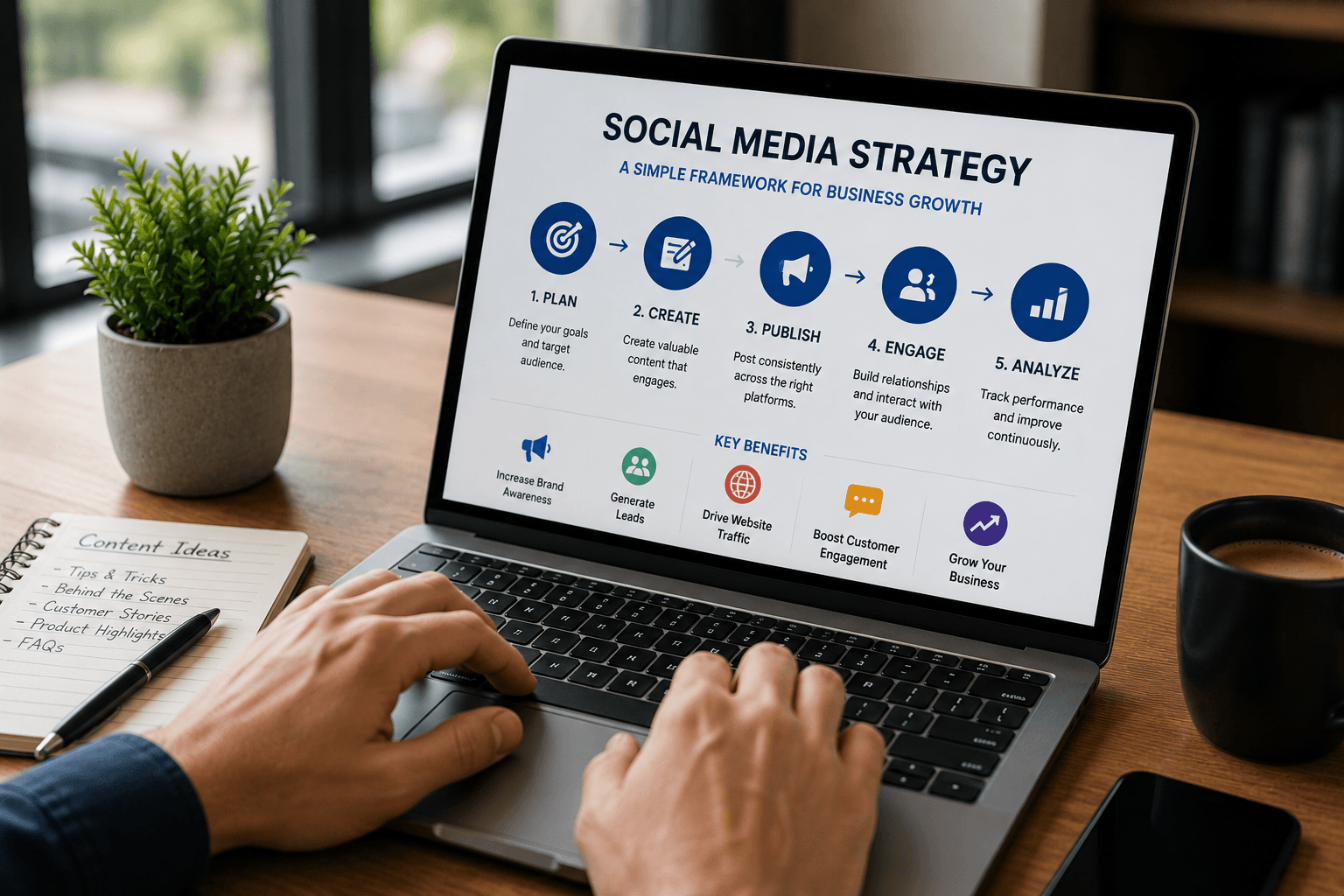
A sustainable strategy can be built around five stages:
Stage One: Research
Understand your audience, competitors and platforms.
Stage Two: Plan
Define goals, content pillars and publishing schedules.
Stage Three: Create
Develop useful, engaging and brand-consistent content.
Stage Four: Promote
Use organic distribution and paid campaigns where appropriate.
Stage Five: Measure
Analyze results and improve the strategy.
This creates a continuous cycle of improvement.
Final Thoughts
Social media marketing in 2026 is not simply about publishing more posts.
It is about creating meaningful connections between a business and its audience.
Businesses that understand their customers, choose the right platforms, create useful content and measure meaningful results can build a stronger digital presence.
The best social media strategy is not necessarily the one that produces the most posts.
It is the one that helps a business achieve its goals.
Create useful content. Build trust. Start conversations. Turn attention into opportunity.
Arrowhead DigiTech helps businesses develop social media and digital marketing strategies designed to increase visibility, engagement and long-term growth.
Frequently Asked Questions
What is social media marketing for businesses?
Social media marketing involves using social platforms to promote a business, communicate with customers, build awareness and support goals such as traffic, leads and sales.
Which social media platform is best for businesses?
There is no single best platform for every business. The right choice depends on the target audience, industry, content format and marketing objectives.
How often should a business post on social media?
There is no universal posting frequency. Businesses should choose a schedule they can maintain consistently while prioritizing quality and relevance.
Can social media generate leads?
Yes. Businesses can use social content, advertising, landing pages, lead forms and direct messages to generate potential customer enquiries.
Should businesses use paid social media advertising?
Paid advertising can help businesses reach specific audiences and support objectives such as awareness, traffic and lead generation. Whether it is worthwhile depends on the campaign strategy and business goals.
How do I measure social media marketing success?
Businesses can measure success using metrics such as engagement, reach, website traffic, leads, conversions, cost per lead and sales, depending on their objectives.
Can Arrowhead DigiTech manage social media marketing?
Yes. Arrowhead DigiTech provides social media management, advertising, content strategy, graphic design, video content, analytics and integrated digital marketing services.
This article provides general digital marketing information and should not be treated as a guarantee of specific social media reach, engagement or business results.