Marketing Automation in 2026: How Businesses Can Save Time and Generate More Leads
Businesses spend countless hours managing repetitive marketing tasks. Marketing automation can streamline campaigns, nurture leads and improve customer engagement while allowing teams to focus on higher-value work.


Modern businesses manage multiple marketing channels at once.
From email campaigns and lead follow-ups to social media and customer communication, repetitive tasks can quickly consume valuable time.
This is where marketing automation can make a major difference.
Instead of manually handling every marketing activity, businesses can use automation to deliver the right message, to the right audience, at the right stage of the customer journey.
What Is Marketing Automation?
Marketing automation uses technology to automate repetitive marketing activities based on predefined actions, schedules or customer behavior.
For example, when someone submits a contact form, an automated system could send a confirmation email and begin an appropriate follow-up sequence.
Automation can support activities such as:
- Email campaigns
- Lead nurturing
- Customer follow-ups
- Form responses
- Audience segmentation
- Campaign scheduling
- Customer onboarding
- Re-engagement campaigns
The purpose isn't to remove the human element from marketing.
It's to make marketing more consistent and efficient.
Why Marketing Automation Matters in 2026
Customers expect businesses to respond quickly.
At the same time, marketing teams need to manage more channels and more customer interactions than ever.
Automation helps businesses maintain consistent communication without requiring employees to manually perform the same tasks repeatedly.
This can save time while creating a more organized customer journey.
How Automation Helps Generate More Leads
Capture Leads Automatically
A potential customer may discover your business outside normal working hours.
With properly configured forms and automated responses, businesses can capture that enquiry immediately rather than waiting for someone to manually process it.
Nurture Potential Customers
Not every visitor is ready to buy immediately.
Automated email sequences can provide useful information, reminders and follow-ups over time, helping businesses stay connected with potential customers.
Follow Up Consistently
One of the biggest problems in lead generation is inconsistent follow-up.
Automation can help ensure that qualified leads don't simply disappear because someone forgot to send a follow-up message.
Personalization Still Matters
Automation doesn't have to mean sending the exact same message to everyone.
Modern marketing systems can segment audiences based on information such as:
- Previous interactions
- Customer interests
- Service preferences
- Website activity
- Purchase history
- Lead stage
This allows businesses to create more relevant communication while reducing unnecessary manual work.
Common Marketing Automation Workflows
A business could create an automated workflow such as:
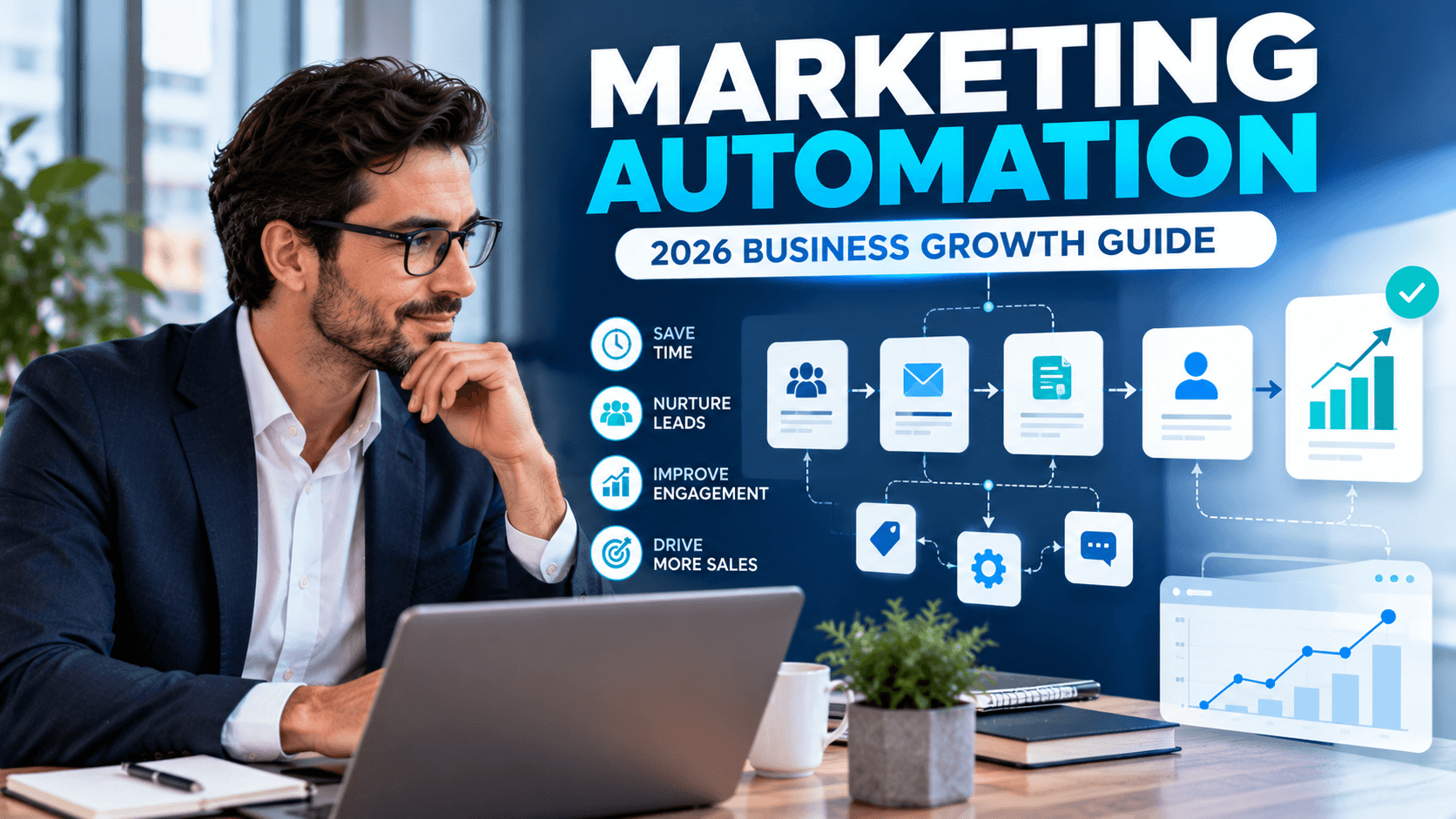
Website Visit → Lead Form → Confirmation → Follow-Up → Helpful Content → Sales Enquiry
Another example could be:
Purchase → Thank You Message → Product Guidance → Review Request → Re-Engagement
The exact workflow depends on the business, audience and marketing goals.
Marketing Automation for Small Businesses
Automation isn't only for large companies.
Small businesses can benefit significantly because they often have limited staff and marketing resources.
A simple automated system can handle repetitive communication while the business team focuses on sales, customer service and operations.
For example, a local service company could automate:
- New enquiry confirmations
- Appointment reminders
- Follow-up emails
- Customer review requests
- Promotional campaigns
This can create a more professional customer experience without requiring a large marketing department.
Avoid Over-Automation
Automation is powerful, but too much automation can damage customer relationships.
Businesses should avoid sending irrelevant messages or creating complicated workflows simply because the technology allows it.
A strong automation strategy should combine:
Automation + Personalization + Human Support
Customers should still have an easy way to contact a real person when they need assistance.
How to Build a Better Automation Strategy
Start with the customer journey rather than the technology.
Step 1: Identify Repetitive Tasks
Find marketing activities that happen frequently and follow predictable patterns.
Step 2: Define Your Goals
Decide whether the automation is designed to generate leads, increase sales, improve retention or save internal time.
Step 3: Create Relevant Workflows
Build simple workflows around actual customer needs.
Step 4: Personalize Communication
Use audience segments and customer information to make messages more relevant.
Step 5: Measure Performance
Track important metrics such as:
- Leads generated
- Conversion rate
- Email engagement
- Customer response
- Revenue generated
- Cost savings
Then improve the workflow based on the results.
Final Thoughts
Marketing automation is becoming an important part of efficient digital marketing in 2026.
It allows businesses to reduce repetitive work, respond faster, nurture leads and maintain consistent customer communication.
But successful automation isn't about sending more messages.
It's about creating better systems that deliver useful communication at the right moment.
Businesses that combine smart automation with strong strategy and genuine human communication can build more efficient marketing operations—and create better opportunities for long-term growth.
FAQs
What is marketing automation?
Marketing automation uses technology to automate repetitive marketing tasks and customer communication.
Can small businesses use marketing automation?
Yes. Small businesses can automate lead follow-ups, emails, reminders, review requests and other repetitive activities.
Does marketing automation replace marketers?
No. It helps marketers reduce repetitive work so they can focus more on strategy, creativity and customer relationships.
Can marketing automation generate leads?
Yes. Automated lead capture, nurturing and follow-up workflows can help businesses manage and convert potential customers more effectively.
What is the most important part of marketing automation?
A clear strategy. Automation works best when workflows are built around real customer needs and measurable business goals.