Google Ads for Small Businesses in 2026: How to Get More Qualified Leads
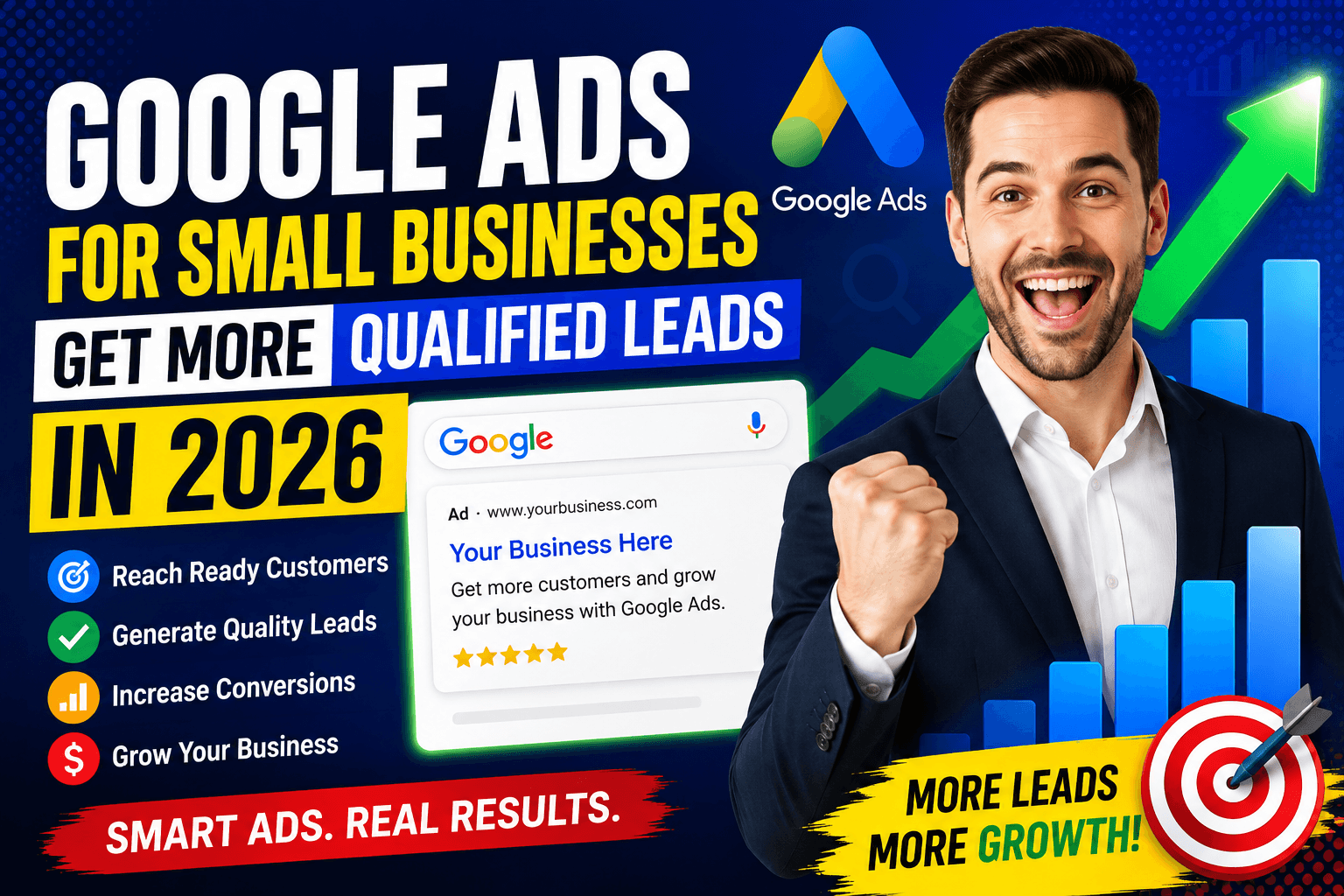
Small businesses can use Google Ads to reach customers who are already searching for their products and services. Learn how a focused PPC strategy can generate qualified leads and support business growth in 2026.
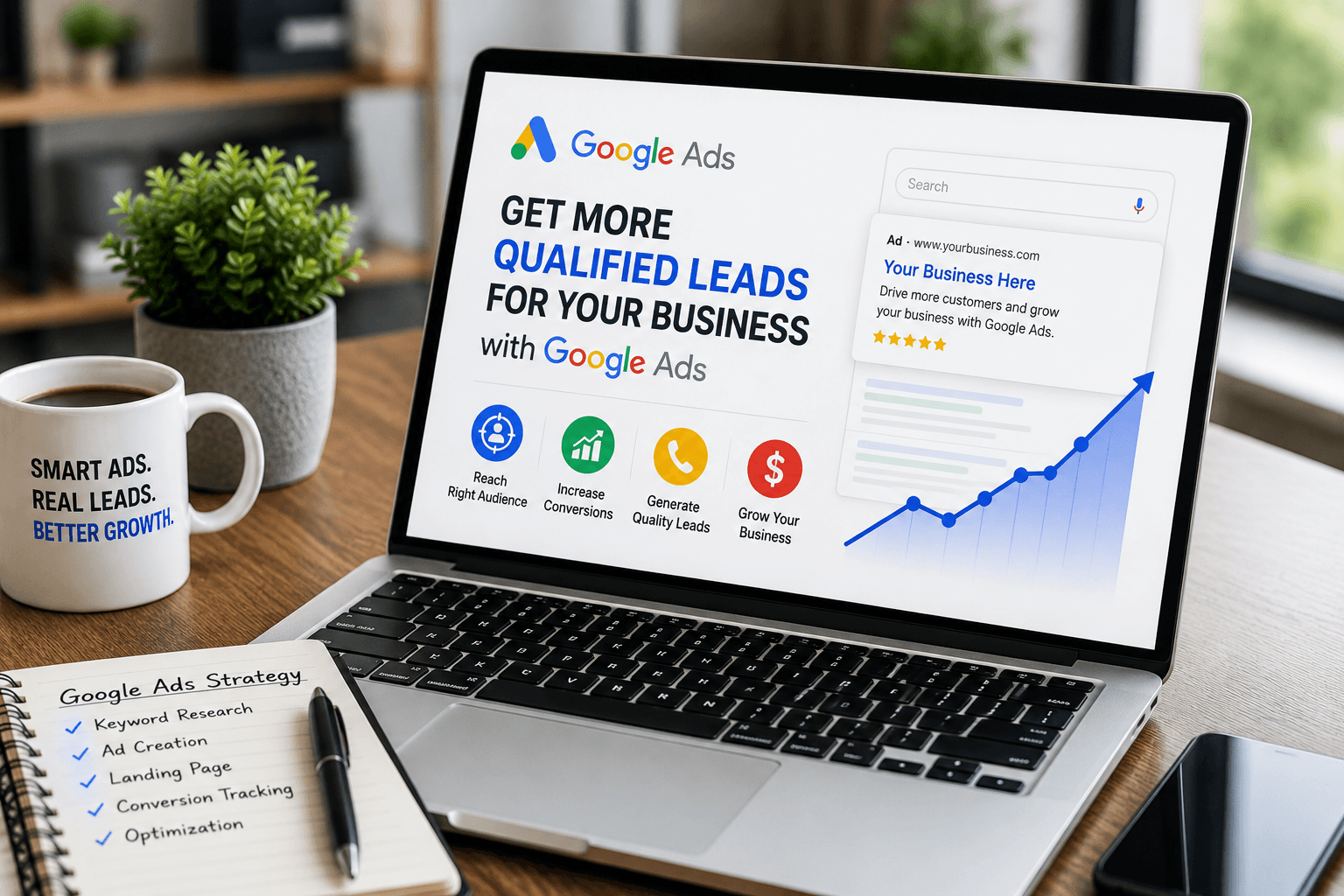

When customers need a product or service, many of them turn to Google first.
They search for businesses, compare options and look for solutions to their problems.
For small businesses, this creates a valuable opportunity.
Instead of waiting for customers to discover your business organically, Google Ads can help place your business in front of people who are actively searching for what you offer.
But successful Google Ads campaigns require more than simply creating an advertisement and setting a budget.
Businesses need the right keywords, targeting, landing pages, messaging and ongoing optimization.
What Are Google Ads?
Google Ads is Google's advertising platform that allows businesses to promote their products and services across Google's network.
Search campaigns are particularly useful for businesses because advertisements can appear when users search for relevant terms.
For example:
- "car rental near me"
- "digital marketing agency"
- "emergency dentist"
- "auto body repair"
- "SEO services for small businesses"
These searches often indicate that the user already has a specific need.
That makes search advertising a powerful tool for reaching potential customers at the right moment.
Why Google Ads Matter for Small Businesses
Small businesses often compete against larger companies with bigger marketing budgets.
Paid search can provide a way to compete for specific searches without needing to build visibility across the entire internet.
A well-managed campaign can help businesses:
- Reach high-intent customers
- Generate leads
- Increase website traffic
- Promote specific services
- Drive phone calls
- Increase bookings
- Test new markets
- Measure advertising performance
The key is targeting the right audience rather than simply generating as many clicks as possible.
Search Intent Is Extremely Important
Not every search represents the same level of buying intent.
Consider the difference between:
"What is SEO?"
and
"SEO agency for small business."
The first search is primarily informational.
The second suggests that the user may be looking for a service provider.
Google Ads campaigns should prioritize keywords and searches that align with the business's actual goals.
Understanding search intent helps businesses spend their advertising budget more efficiently.
Choose the Right Keywords
Keywords are one of the foundations of a Google Ads campaign.
Businesses should identify terms that potential customers are likely to use when searching for their products or services.
Keyword research can consider:
- Search intent
- Location
- Competition
- Relevance
- Commercial intent
- Customer language
For local businesses, geographic terms can also be important.
For example:
"car rental Atlanta"
can be more relevant to an Atlanta-based rental company than a broad term such as:
"car rental."
More specific keywords can help campaigns focus on relevant customers.
Use Negative Keywords
One of the most overlooked parts of PPC management is negative keyword targeting.
Negative keywords help prevent advertisements from appearing for searches that are not relevant to the business.
For example, a business selling professional services may want to avoid searches related to:
- Free services
- Jobs
- Training
- Courses
- DIY solutions
The exact negative keywords depend on the business and campaign.
The goal is to reduce wasted clicks and focus the budget on more relevant searches.
Write Better Ad Copy
An effective advertisement should quickly communicate why the customer should consider the business.
Ad messaging can highlight:
- Services
- Benefits
- Location
- Experience
- Offers
- Unique selling points
- Calls to action
For example, instead of using a generic message such as:
"We Provide Marketing Services."
a business could communicate something more specific:
"Digital Marketing for Growing Small Businesses."
The message should match the customer's search and the landing page they reach.
Landing Pages Matter
Getting the click is only the beginning.
After clicking an advertisement, the customer needs to reach a page that clearly explains what the business offers.
A strong landing page should have:
- Clear messaging
- Relevant information
- Strong visual hierarchy
- Fast loading
- Mobile responsiveness
- Trust signals
- Simple contact options
- Clear calls to action
If an advertisement promises one thing but the landing page discusses something completely different, the customer may leave.
Mobile Optimization Is Essential
Many customers search from smartphones.
This is especially important for local businesses where users may want to call or visit immediately.
A mobile landing page should make it easy to:
- Read information
- Tap buttons
- Call the business
- Submit a form
- Find the location
- Complete a purchase or booking
A campaign can generate clicks successfully but still perform poorly if the website experience is difficult on mobile devices.
Location Targeting for Local Businesses
Businesses that operate in specific areas can use geographic targeting to focus advertising on relevant locations.
For example, a business may target:
- Specific cities
- Neighborhoods
- Service areas
- Regions
This can help prevent advertising spend from being wasted on people who are unlikely to become customers because they are outside the business's service area.
Location strategy should always reflect where the business can actually serve customers.
Set a Realistic Budget
There is no universal Google Ads budget that works for every business.
Budget requirements depend on:
- Industry
- Competition
- Location
- Keywords
- Customer value
- Conversion rates
- Campaign objectives
A small business should start with a budget it can realistically support and use campaign data to determine whether additional investment makes sense.
The goal should not be spending more.
The goal should be generating better results from the available budget.
Track Conversions
Clicks are useful, but they are not the final goal.
Businesses should track meaningful actions such as:
- Form submissions
- Phone calls
- Purchases
- Bookings
- Quote requests
- Consultation requests
Conversion tracking allows businesses to understand whether advertising is producing actual business opportunities.
Without conversion tracking, it can be difficult to determine which campaigns, keywords or advertisements are generating results.
Don't Judge Campaigns by Clicks Alone
A campaign receiving thousands of clicks may look successful.
But if those clicks do not produce customers, the campaign may not be delivering strong business value.
Businesses should consider metrics such as:
- Cost per click
- Conversion rate
- Cost per lead
- Conversion value
- Return on ad spend
- Qualified leads
The most important metric depends on the business model and campaign objective.
Test Different Strategies
Google Ads should not be treated as a "set it and forget it" system.
Businesses can test:
- Different headlines
- Ad descriptions
- Keywords
- Landing pages
- Calls to action
- Geographic targeting
- Audience settings
Performance data can reveal which combinations are generating stronger results.
Continuous testing can help campaigns improve over time.
Google Ads and SEO Can Work Together
Paid advertising and organic SEO are different strategies, but they can complement each other.
Google Ads can provide immediate opportunities to test:
- Keywords
- Offers
- Messaging
- Landing pages
SEO can help build long-term organic visibility.
Together, they can create a broader search marketing strategy.
For example:
Google Ads → Immediate Visibility
SEO → Long-Term Organic Growth
Businesses can use insights from both channels to improve their overall digital marketing strategy.
Common Google Ads Mistakes
Targeting Too Many Keywords
A campaign with too many unrelated keywords can become difficult to manage and optimize.
Ignoring Search Intent
Not every keyword is likely to generate customers.
Sending Traffic to the Homepage
A dedicated landing page can often provide a more relevant experience.
Forgetting Negative Keywords
Irrelevant searches can consume advertising budget.
Not Tracking Conversions
Without conversion data, campaign decisions become much harder.
Using Generic Ad Copy
Ads should communicate a clear reason for customers to choose the business.
Never Optimizing Campaigns
Performance can change as competitors, search behaviour and market conditions change.
A Practical Google Ads Strategy for 2026
Businesses can build a campaign using a simple process.
Step 1: Define the Goal
Decide whether the campaign is designed to generate leads, calls, sales, bookings or another specific outcome.
Step 2: Research Keywords
Identify relevant searches based on customer intent.
Step 3: Organize Campaigns
Group related services and keywords into logical campaign structures.
Step 4: Write Relevant Ads
Create messaging that matches the search intent.
Step 5: Build Landing Pages
Send visitors to pages that directly relate to the advertisement.
Step 6: Configure Conversion Tracking
Measure the actions that matter to the business.
Step 7: Launch and Monitor
Review performance regularly after the campaign begins.
Step 8: Optimize
Adjust keywords, ads, targeting and landing pages based on actual performance.
How Arrowhead DigiTech Can Help
At Arrowhead DigiTech, we help businesses build and manage paid advertising campaigns focused on measurable business objectives.
Our services include:
Google Ads Management
We develop and manage campaigns around relevant keywords, audiences and business goals.
Keyword Research
We identify search terms based on relevance and customer intent.
Campaign Optimization
We review campaign performance and identify opportunities to improve efficiency.
Conversion Tracking
We help businesses measure meaningful customer actions.
Landing Page Development
We create focused landing pages designed around specific campaigns and services.
Local Google Ads
We help businesses target customers in specific locations and service areas.
Remarketing
We can help businesses reconnect with users who have previously interacted with their website or digital presence where appropriate.
Integrated Digital Marketing
Google Ads can be combined with SEO, social media, website development and other marketing channels to create a broader growth strategy.
Our goal is not simply to generate clicks.
Our goal is to turn relevant searches into real business opportunities.
A Simple PPC Growth Framework
A sustainable Google Ads strategy can follow five stages:
Stage One: Research
Understand your customers, competitors and search intent.
Stage Two: Build
Create focused campaigns, advertisements and landing pages.
Stage Three: Launch
Start campaigns with appropriate targeting and budgets.
Stage Four: Measure
Track conversions and meaningful business outcomes.
Stage Five: Optimize
Continuously improve campaigns using performance data.
This creates a repeatable process for improving paid search performance.
Final Thoughts
Google Ads can be a powerful marketing channel for small businesses when campaigns are built around customer intent and measurable objectives.
The goal is not simply to appear at the top of search results.
It is to appear when the right customer is searching for the right solution.
Strong keyword research, relevant advertisements, focused landing pages, conversion tracking and continuous optimization can help businesses make better use of their advertising budgets.
Google Ads can also work alongside SEO and other digital marketing channels to create a stronger overall online presence.
The right search, the right customer and the right message can create a powerful combination.
Arrowhead DigiTech helps businesses plan, manage and optimize Google Ads campaigns designed to generate visibility, leads and growth.
Frequently Asked Questions
What is Google Ads for small businesses?
Google Ads allows small businesses to advertise their products and services when potential customers search for relevant terms on Google.
Is Google Ads worth it for a small business?
It can be, particularly when campaigns target relevant searches and the business has a clear conversion strategy. Results depend on factors such as competition, targeting, offer, landing page and campaign management.
How much should a small business spend on Google Ads?
There is no fixed amount. The appropriate budget depends on the industry, competition, location, customer value and campaign objectives.
How long does Google Ads take to work?
Ads can begin generating traffic once campaigns are approved and running, but meaningful optimization requires collecting enough performance data to understand what is working.
Should Google Ads send visitors to my homepage?
Not always. For many campaigns, a relevant landing page can provide a more focused experience and make it easier for visitors to take the desired action.
What should I track in Google Ads?
Businesses should track meaningful conversions such as calls, enquiries, bookings, purchases and quote requests rather than focusing only on clicks.
Can Arrowhead DigiTech manage Google Ads campaigns?
Yes. Arrowhead DigiTech provides Google Ads management, keyword research, campaign optimization, conversion tracking, landing page development and integrated digital marketing services.
This article provides general digital marketing information and does not guarantee specific advertising performance, rankings, leads or revenue. Google Ads results vary based on market conditions, competition, targeting, budget, website experience and other factors.