Data Scraping in 2026: How Businesses Can Turn Web Data Into Actionable Insights
Businesses generate decisions from data every day. Data scraping can help collect relevant information from public web sources, organize it efficiently and turn large amounts of online information into useful business insights.


The internet contains an enormous amount of information.
Competitor pricing, product details, business listings, market trends, customer-facing information and industry data are constantly changing.
For businesses, the challenge isn't simply finding information.
It's collecting the right information efficiently and turning it into something useful.
This is where data scraping can become a valuable business service.
What Is Data Scraping?
Data scraping is the process of collecting information from websites or other publicly accessible online sources and organizing it into a structured format.
Instead of manually visiting hundreds or thousands of web pages, businesses can use automated processes to collect specific information at scale.
Depending on the project, this could include:
- Business listings
- Product information
- Public pricing data
- Industry information
- Competitor data
- Property listings
- Public directories
- Market research data
The exact information collected depends on the business objective and the source's terms and technical limitations.
Why Businesses Need Data in 2026
Making decisions without current information can create unnecessary uncertainty.
Businesses need to understand their markets, competitors and customers to identify opportunities and respond to changes.
Data scraping can help make information collection more systematic.
Instead of spending hours manually copying information into spreadsheets, businesses can develop repeatable data collection workflows that organize relevant information for analysis.
Competitor Research
One of the practical applications of web data collection is competitor research.
A business may want to understand publicly available information such as:
- Product offerings
- Service categories
- Publicly listed prices
- Locations
- Promotions
- Market positioning
Organized competitor data can make it easier to identify patterns and changes over time.
The goal isn't simply to collect information.
It's to understand what the market is doing.
Finding New Business Opportunities
Data can also help businesses discover potential opportunities.
For example, a company may collect publicly available information about businesses in a particular industry or geographic market.
That dataset can then be organized based on factors such as location, business type or services offered.
Sales and marketing teams can use these insights to identify potential markets and build more focused outreach strategies, subject to applicable privacy and marketing rules.
Data Scraping for Lead Research
Manual lead research can consume significant amounts of time.
Businesses may need to identify companies, locations, services or other publicly available business information before starting an outreach campaign.
Automated data collection can help organize this research into structured datasets.
A typical workflow might look like:
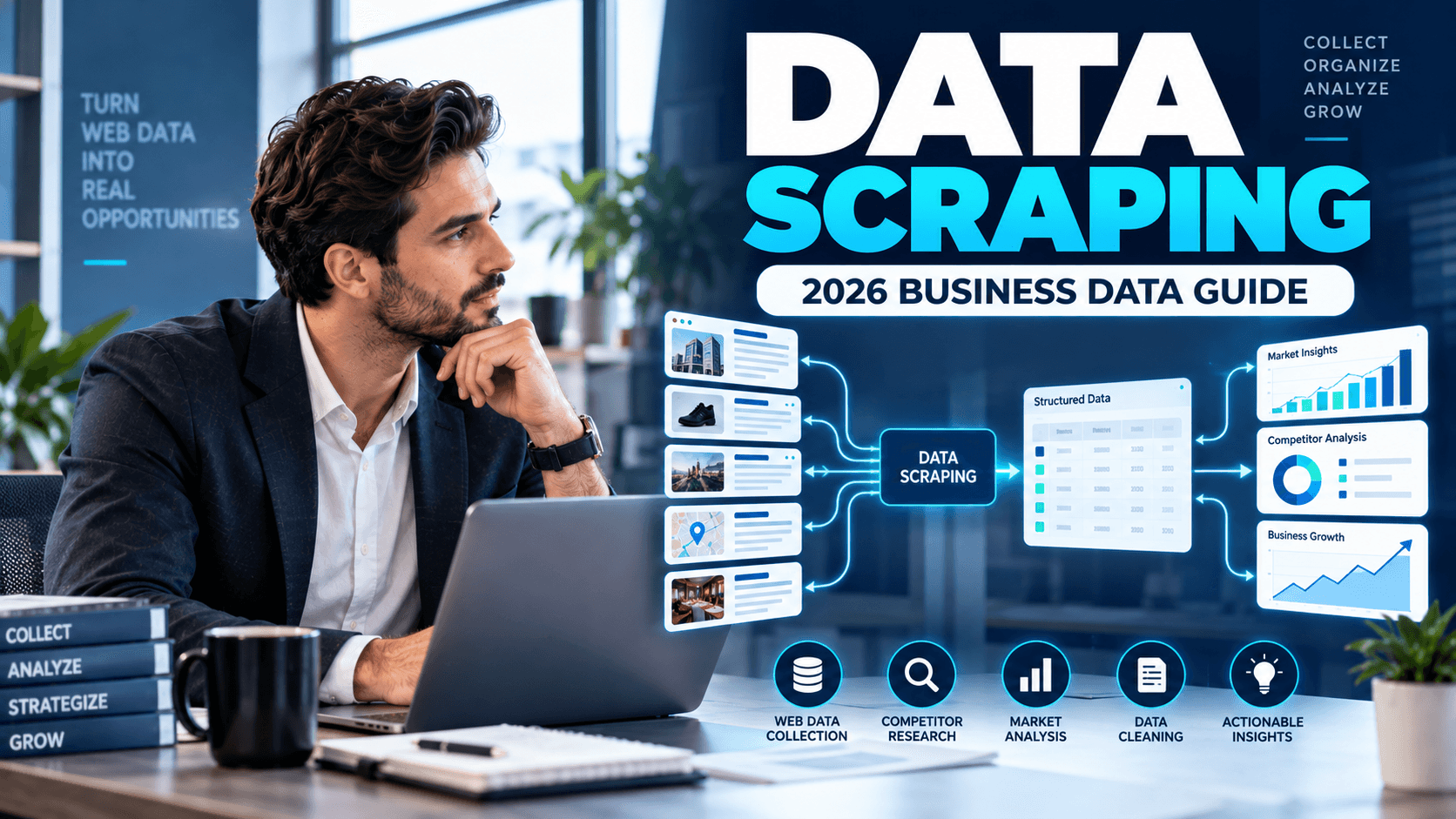
Public Web Sources → Data Collection → Cleaning → Organization → Analysis → Business Action
This turns scattered information into a more usable resource.
Data Quality Matters
Collecting a large amount of data doesn't automatically make it valuable.
Poor-quality information can create problems.
Data may contain:
- Duplicate records
- Missing information
- Outdated details
- Incorrect formatting
- Irrelevant entries
That's why data cleaning and validation are important parts of a professional scraping workflow.
Useful data should be accurate, structured and relevant to the business objective.
From Raw Data to Business Intelligence
The real value of data scraping often appears after collection.
Raw information can be transformed into:
- Spreadsheets
- Databases
- Reports
- Dashboards
- Market research datasets
- Competitor tracking systems
Businesses can then analyze the information to identify trends and support strategic decisions.
This is the difference between collecting data and using data.
Automation Saves Time
Imagine manually checking hundreds of websites every week for changes.
That process can become repetitive and inefficient.
Automated workflows can reduce manual data collection and make recurring research more manageable.
For businesses that regularly monitor public information, automation can create a repeatable process instead of starting the research from scratch every time.
Businesses That Can Benefit
Data scraping can support many industries and use cases, including:
E-commerce
Monitor publicly available product information and market trends.
Automotive
Research vehicle listings, dealership information and public market data.
Real Estate
Collect publicly available property information for market research.
Travel
Analyze publicly available information about destinations, services and market offerings.
Marketing Agencies
Build structured research datasets for market analysis and campaign planning.
Local Businesses
Research competitors, local markets and publicly available business information.
Responsible Data Scraping
Professional data scraping should be approached responsibly.
Businesses should consider website terms, applicable laws, privacy requirements, access restrictions and the nature of the information being collected.
The focus should be on appropriate use of publicly accessible business information, rather than collecting sensitive personal information.
Responsible data practices help create sustainable and trustworthy workflows.
How to Start a Data Scraping Project
A successful project should begin with a clear objective.
1. Define the Data You Need
Don't collect everything. Identify the information that supports your business goal.
2. Identify Suitable Sources
Determine which public sources contain relevant information.
3. Build the Collection Process
Create an appropriate workflow for gathering the required information.
4. Clean and Structure the Data
Remove duplicates, standardize formats and organize the dataset.
5. Analyze the Results
Look for patterns, opportunities and meaningful changes.
6. Turn Insights Into Action
Use the information to support marketing, sales, research or strategic decisions.
Final Thoughts
Data scraping can help businesses move from manual research to structured information gathering.
When combined with data cleaning, analysis and responsible practices, it can save time and provide businesses with a clearer view of their market.
In 2026, the advantage isn't simply having more data.
It's having the right data, organized properly and ready to support better decisions.
FAQs
What is data scraping?
Data scraping is the automated or semi-automated collection of information from websites or other online sources and its organization into a usable format.
Is data scraping useful for small businesses?
Yes. Small businesses can use it for competitor research, market research, lead research and other data-driven activities.
What type of information can be collected?
Depending on the source and project, businesses may collect publicly available product, business, pricing, location and industry information.
Is data scraping legal?
The legality depends on factors such as the source, type of data, applicable laws, website terms and how the collected information is used. Businesses should review these considerations before starting a project.
What happens after data is scraped?
Collected information can be cleaned, structured, analyzed and transformed into datasets, reports or dashboards that support business decisions.