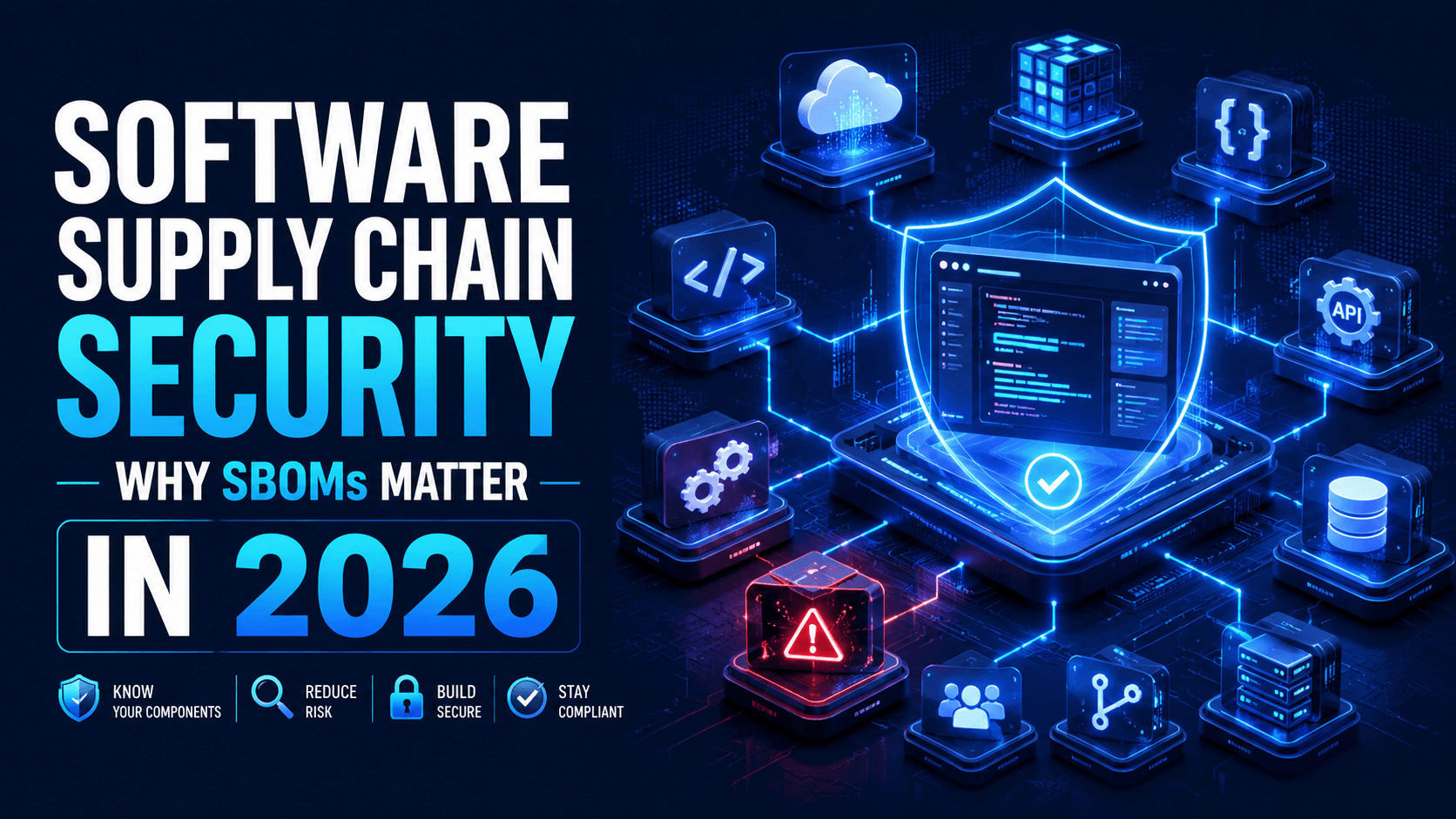
Software Supply Chain Security in 2026: Why Every Business Needs an SBOM
Modern applications depend on hundreds of third-party components. Learn how an SBOM helps businesses understand their software, respond to vulnerabilities and reduce supply-chain risk.

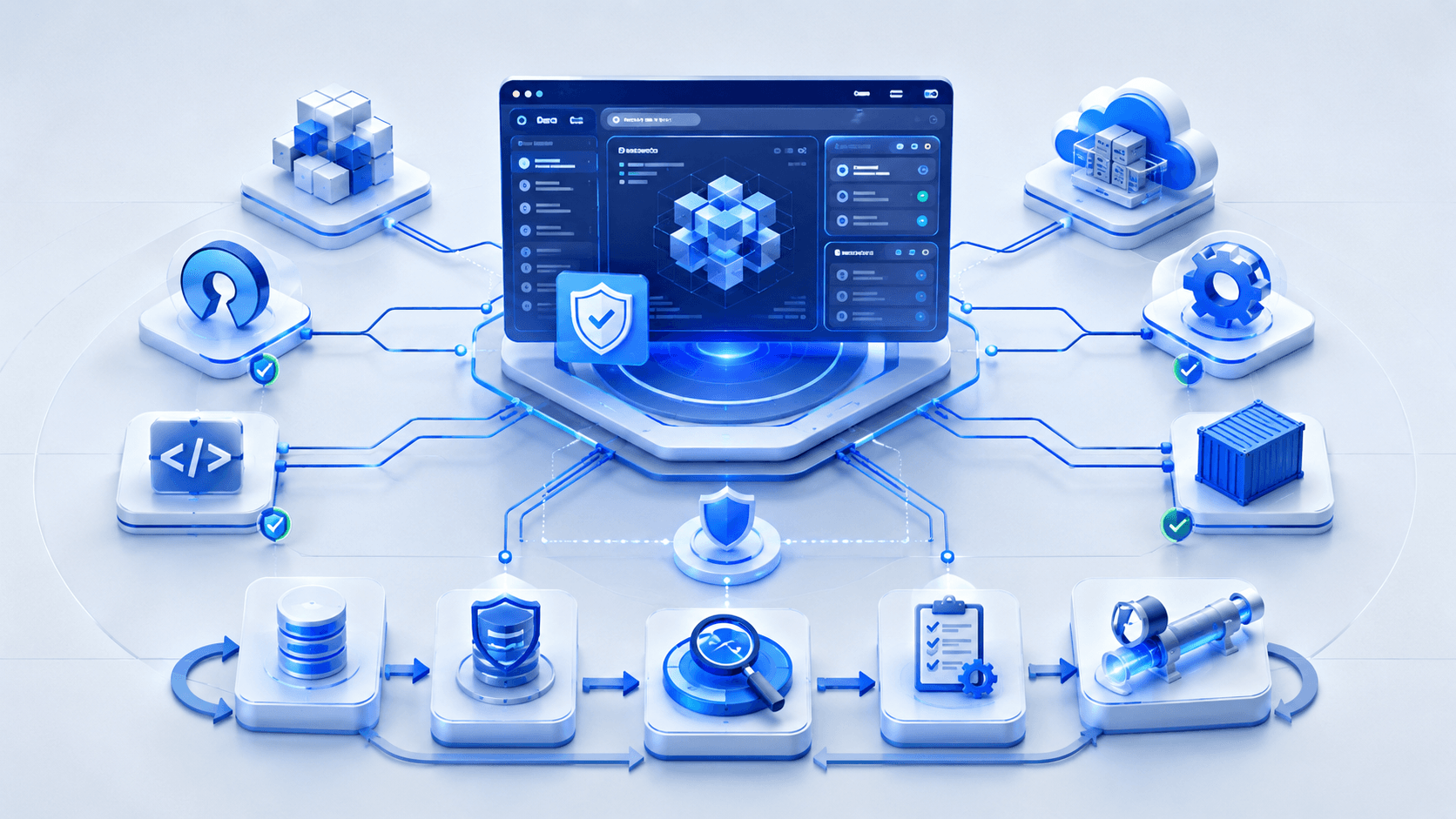
Modern software is rarely built entirely from the beginning by one development team.
A typical website, mobile application, SaaS platform or business system may include open-source libraries, commercial packages, cloud services, development frameworks, plugins, containers and code supplied by several external vendors.
These components help companies launch products faster and avoid rebuilding features that already exist.
However, every additional component also introduces a new dependency.
If a commonly used library contains a serious vulnerability, the risk may spread across thousands of applications. If a software supplier is compromised, malicious code may be distributed through a legitimate update. If an outdated plugin remains hidden inside a business system, the company may not realise that it is exposed.
This is the challenge of software supply chain security.
Businesses need to understand not only the code developed by their own teams but also the external components, tools and services on which that code depends.
A Software Bill of Materials, commonly known as an SBOM, provides this visibility.
CISA describes an SBOM as a key building block for software security and software supply chain risk management. It acts like an ingredients list that helps organisations understand what is contained inside a software product.
At Arrowhead DigiTech, we help businesses strengthen software development, identify third-party dependencies and integrate security into the complete application lifecycle.
What Is a Software Supply Chain?
The software supply chain includes the people, tools, code, services and processes involved in creating and delivering software.
It may include:
- Internal developers
- Open-source projects
- Commercial software providers
- Cloud platforms
- Code repositories
- Package managers
- Build servers
- Development frameworks
- APIs
- Plugins and extensions
- Container images
- Deployment pipelines
- Software-update systems
A business may trust the final application while having limited visibility into the components used to create it.
For example, an e-commerce website may contain a content-management platform, payment plugin, analytics library, JavaScript framework, customer-support integration and dozens of indirect dependencies.
A vulnerability in any important component may create risk for the complete system.
Software supply chain security focuses on understanding these relationships and reducing the chance that vulnerable, altered or unauthorised components enter production systems.
What Is an SBOM?
A Software Bill of Materials is a structured record of the components and supply-chain relationships contained within a software product.
The US National Telecommunications and Information Administration defines an SBOM as a formal record containing details about the components used to build software and the relationships between them.
An SBOM may include information such as:
- Component name
- Supplier or author
- Component version
- Package identifier
- Dependency relationships
- Open-source licence
- File or package hashes
- Creation date
- SBOM author
- Known component references
The exact information depends on the SBOM standard, business requirements and software environment.
An SBOM does not necessarily contain the source code itself. It provides structured information about what the software contains.
Direct and Indirect Dependencies
Businesses usually recognise their direct dependencies.
A developer may intentionally install a web framework, database library or payment package.
However, that package may depend on several other libraries. Those libraries may depend on additional components.
These are indirect or transitive dependencies.
A team may therefore install one package while adding dozens of supporting components without manually reviewing every one of them.
An effective SBOM should provide visibility beyond the packages listed in a project’s main configuration file.
It should help the organisation understand the deeper dependency structure of the released application.
Without this information, a security team may receive an alert about a vulnerable library but have no reliable way to determine which products contain it.
Why SBOMs Matter in 2026
Software environments are becoming more complex.
Businesses are using:
- Cloud-native applications
- Microservices
- Containers
- AI models
- Third-party APIs
- Automated development tools
- Open-source frameworks
- Continuous deployment pipelines
A single application may change several times per day. New components may be added automatically during development or deployment.
Static spreadsheets cannot reliably track this level of change.
CISA updated its recommended minimum elements for SBOMs in 2025 to reflect current operational and supply-chain risk-management needs. The guidance is intended to help agencies and organisations use SBOMs more effectively.
In May 2026, CISA also published minimum-element guidance for AI-related software bills of materials, reflecting the growing need to understand software, models and dependencies inside artificial-intelligence systems.
This demonstrates that software transparency is expanding beyond traditional applications into AI and data-driven systems.
An SBOM Supports Faster Vulnerability Response
Imagine that a major vulnerability is discovered in a widely used open-source library.
Without an SBOM, a business may need to contact every development team, search different repositories and manually inspect applications to determine whether the affected component is present.
This process can take days or weeks.
With accurate SBOM information, the security team can search the organisation’s component inventory and identify:
- Which applications use the component
- Which version is installed
- Whether the component is direct or indirect
- Which business services may be affected
- Which development team owns the application
- Whether an updated version is available
The organisation can then prioritise remediation according to actual exposure and business impact.
An SBOM does not automatically fix the vulnerability. It gives the company the visibility required to respond more efficiently.
An SBOM Is Not a Vulnerability Scanner
An SBOM and a vulnerability scanner perform related but different functions.
An SBOM tells the organisation what components are present.
A vulnerability scanner compares those components or running systems against information about known security issues.
Businesses often gain the greatest value by connecting SBOM information with:
- Vulnerability databases
- Software-composition analysis tools
- Asset-management systems
- Security monitoring
- Patch-management workflows
- Development tickets
- Vendor alerts
An SBOM should become part of a working security process rather than a document generated once and stored without review.
What Is VEX?
A vulnerability may be associated with a component without being exploitable in every application that contains it.
For example, the affected function may not be enabled or accessible within a particular product.
A Vulnerability Exploitability eXchange, commonly known as VEX, can communicate whether a known vulnerability affects a specific software product and what action the supplier recommends.
SBOM information explains which components are present.
VEX information adds context about whether a particular vulnerability is relevant to that product.
Together, these records can help organisations avoid treating every vulnerability alert as equally urgent.
However, exploitability decisions should be supported by technical evidence and updated when the software changes.
SBOM Formats
SBOMs should normally use machine-readable standards so that security and development tools can process them automatically.
Two widely used formats are SPDX and CycloneDX.
SPDX
SPDX is an open standard for communicating software bill-of-materials information, including components, provenance, licences and security-related information. SPDX is recognised as an international standard under ISO/IEC 5962.
CycloneDX
CycloneDX is an OWASP-originated bill-of-materials standard designed for software supply chain and cyber-risk use cases. Its ecosystem supports structured formats and several types of bills of materials.
Businesses should select a format based on:
- Customer requirements
- Regulatory expectations
- Existing tools
- Development languages
- Vendor compatibility
- Security workflows
- Required metadata
In some environments, supporting both formats may be practical.
The most important factor is not simply choosing a format. The SBOM must be complete, accurate, current and usable by the organisation’s security process.
Software Supply Chain Risk Is Not Limited to Open Source
Open-source components receive significant attention because they are widely reused.
However, software supply chain risk may also involve:
- Commercial libraries
- Proprietary vendor code
- Cloud services
- Development tools
- Build systems
- Container base images
- Software updates
- Contractor-developed applications
- Abandoned plugins
- Unmaintained internal code
A commercial licence does not guarantee that a component is secure or actively maintained.
Businesses should assess all important dependencies according to their support status, security history and role within critical operations.
AI Applications Need Supply Chain Visibility Too
An AI application may include far more than one model.
Its supply chain can contain:
- Foundation models
- Fine-tuned models
- Training datasets
- Vector databases
- Python libraries
- Model-serving frameworks
- Prompt-management systems
- External tools
- Cloud infrastructure
- API providers
- Retrieval sources
- Security filters
A vulnerability or unexpected change in one component may affect the complete AI workflow.
CISA’s 2026 AI SBOM guidance extends the software-ingredients concept to AI systems so organisations can understand the components involved in developing and operating them.
Businesses deploying AI should document model providers, versions, supporting libraries, external data sources and tool permissions rather than treating the AI platform as one unexplained service.
Regulatory Expectations Are Increasing
Software transparency and lifecycle security are becoming increasingly important in procurement and regulation.
The European Union’s Cyber Resilience Act introduces cybersecurity requirements for manufacturers of products with digital elements. These requirements cover planning, design, development, maintenance and vulnerability handling across the product lifecycle.
The CRA entered into force on 10 December 2024. Its main obligations apply from 11 December 2027, while vulnerability and severe-incident reporting obligations apply from 11 September 2026.
From that September 2026 date, relevant manufacturers must submit early warnings for actively exploited vulnerabilities and severe incidents within 24 hours of becoming aware of them, followed by fuller notifications under the applicable timeline.
An SBOM does not automatically create CRA compliance, and requirements should be reviewed with qualified compliance professionals.
However, accurate component records can support vulnerability identification, impact analysis, supplier communication and incident response.
Secure Software Development Requires More Than an SBOM
An SBOM provides transparency, but secure software also requires strong development practices.
NIST’s Secure Software Development Framework organises secure-development practices into four areas:
- Preparing the organisation
- Protecting software and its components
- Producing well-secured software
- Responding to vulnerabilities
NIST explains that the framework can help reduce vulnerabilities in released software, limit the impact of undiscovered weaknesses and address root causes so similar issues are less likely to return.
A complete programme may include:
- Secure coding standards
- Code review
- Dependency scanning
- Secret detection
- Access controls
- Protected build systems
- Automated testing
- Signed releases
- Vulnerability disclosure
- Patch management
- Incident response
The SBOM should support these activities rather than replace them.
DevSecOps and Automated SBOM Generation
Manually creating an SBOM for every release can quickly become impractical.
Modern development teams can integrate SBOM generation into their DevSecOps pipelines.
The process may run when:
- Developers submit code
- A software build is created
- A container image is produced
- An application is released
- A package is published
- A production deployment begins
The generated SBOM can then be validated, stored and connected with security-scanning tools.
In March 2026, NIST released live implementation guidance demonstrating how organisations can integrate Secure Software Development Framework practices into modern DevSecOps pipelines using commercially available technology. The project focuses on automation and standardisation throughout the development lifecycle.
Automating the process helps ensure that the SBOM reflects the actual released application rather than an outdated development plan.
What Businesses Should Do Now
1. Identify Important Software
Create an inventory of applications used, developed or distributed by the organisation.
Include:
- Websites
- Mobile applications
- Internal systems
- SaaS platforms
- APIs
- Desktop software
- Containers
- Connected devices
- AI applications
- Custom integrations
Prioritise systems that process sensitive data, support critical operations or serve external customers.
2. Identify Software Owners
Every important application should have a named technical or business owner.
The owner should understand:
- What the application does
- Which team maintains it
- Which vendor supports it
- Where its code is stored
- How it is updated
- What happens when a vulnerability is discovered
Unowned software is more likely to become outdated and insecure.
3. Review Third-Party Components
Development teams should identify direct and indirect dependencies.
They should examine:
- Current version
- Support status
- Maintenance activity
- Security advisories
- Licence conditions
- Available replacements
- Importance to the application
Unused dependencies should be removed.
Every unnecessary component creates additional maintenance and security work.
4. Generate SBOMs During the Build
Where possible, create the SBOM from the actual build environment.
This provides stronger visibility into the components included in the released software.
Generating an SBOM only from a manually maintained project list may miss compiled packages, container components or indirect dependencies.
5. Validate SBOM Quality
The business should check whether the SBOM is:
- Complete
- Machine-readable
- Correctly formatted
- Connected to the correct release
- Properly versioned
- Protected from unauthorised changes
- Accessible to authorised users
An incomplete SBOM can create false confidence.
6. Connect SBOMs to Vulnerability Monitoring
Component information should be continuously compared with reliable security advisories.
When a new vulnerability is published, the organisation should be able to identify potentially affected applications and assign remediation work.
7. Request SBOMs From Vendors
Businesses should ask important software suppliers whether they can provide:
- A current SBOM
- Supported SBOM formats
- Vulnerability-notification procedures
- Security-update timelines
- Product-support periods
- VEX information
- Secure-development evidence
Vendor answers should be considered during procurement and contract renewal.
8. Protect the Development Pipeline
The organisation should restrict access to:
- Code repositories
- Build systems
- Package registries
- Signing keys
- Deployment tools
- Cloud credentials
Multifactor authentication, least-privilege access and audit logging should be applied to important development systems.
9. Create a Vulnerability Response Process
The process should explain:
- Who reviews security alerts
- How affected products are identified
- How risk is prioritised
- Who develops the fix
- How customers are informed
- How updates are tested
- How reporting obligations are handled
- How the incident is documented
An SBOM creates visibility, but the business still needs people and processes capable of acting on it.
What Small Businesses Need to Understand
Small businesses may not build large enterprise platforms, but they still depend on software supply chains.
A small company may operate:
- A WordPress website with several plugins
- A Shopify store with external applications
- A custom customer portal
- A mobile booking application
- A cloud-based CRM
- Automated marketing integrations
- An AI customer assistant
The business may not control every component, but it can still improve visibility.
Small companies should begin by identifying critical software, removing unsupported plugins, keeping applications updated and asking vendors about their security practices.
They do not need to establish a complex security department before taking action.
A reliable inventory and a clear update process are valuable starting points.
Common SBOM Mistakes
Generating the SBOM Only Once
Software changes continuously. An SBOM should be associated with a specific release and updated when the product changes.
Tracking Only Direct Dependencies
Indirect dependencies may contain serious vulnerabilities and should also be identified where possible.
Storing the SBOM Without Using It
The record should support vulnerability response, procurement, compliance and development decisions.
Assuming Every Vulnerability Is Exploitable
Security teams should evaluate how a component is used and consider reliable exploitability information.
Publishing Sensitive Information Publicly
SBOM sharing should follow appropriate access and distribution policies. Not every internal detail needs to be publicly accessible.
Treating the SBOM as Complete Security
An ingredients list cannot prevent insecure coding, stolen credentials or compromised infrastructure by itself.
Ignoring Vendor Software
Third-party applications may introduce as much risk as internally developed systems.
What Arrowhead DigiTech Is Doing
At Arrowhead DigiTech, we help businesses improve visibility and security throughout their software development and technology environments.
Our approach includes:
Software and Dependency Audits
We review applications, frameworks, libraries, plugins, packages and integrations to identify outdated or unnecessary dependencies.
SBOM Readiness Assessments
We evaluate whether development environments can generate, store and maintain useful software component records.
Secure Software Development
We integrate security requirements, code review and dependency management into custom web, mobile and software projects.
DevSecOps Pipeline Integration
We help automate security testing, dependency scanning and SBOM generation within development and deployment workflows.
Cloud and Container Security
We review cloud workloads, container images, access controls and deployment configurations.
Third-Party Vendor Reviews
We help businesses assess important software suppliers, support timelines and vulnerability-management processes.
Vulnerability Monitoring
We support processes for identifying affected components, prioritising risk and coordinating updates.
AI Supply Chain Reviews
We document AI models, libraries, APIs, data services and external tools involved in automated workflows.
Ongoing Application Maintenance
We provide software updates, performance monitoring, security reviews and technical support after deployment.
Our objective is not simply to produce a technical file.
We help businesses turn software transparency into a practical security and risk-management process.
A Practical Implementation Roadmap
Businesses can introduce software supply chain security in five stages.
Stage One: Discovery
Identify important applications, suppliers, repositories and development tools.
Stage Two: Dependency Visibility
Generate initial component inventories and identify unsupported software.
Stage Three: Pipeline Integration
Automate SBOM generation, dependency scanning and security testing.
Stage Four: Response Planning
Connect component data to vulnerability monitoring and remediation workflows.
Stage Five: Governance and Improvement
Review vendors, maintain records and update secure-development practices regularly.
This phased approach makes implementation manageable for both small companies and larger development teams.
Final Thoughts
Businesses cannot secure software they do not understand.
Modern applications may contain hundreds of components developed and maintained by different organisations. A vulnerability in one small dependency can create risk across websites, SaaS platforms, mobile applications and AI systems.
A Software Bill of Materials provides essential visibility into this environment.
It helps organisations identify components, understand dependencies, investigate vulnerabilities and communicate with suppliers.
However, an SBOM delivers the greatest value when it is connected to secure development, DevSecOps automation, vulnerability monitoring and incident response.
The regulatory environment is also moving quickly. The EU Cyber Resilience Act’s reporting requirements begin applying on 11 September 2026, increasing the importance of knowing which software products and components may be affected by a serious vulnerability.
Arrowhead DigiTech helps businesses strengthen software supply chains through application audits, SBOM readiness, DevSecOps integration, secure development, cloud security and ongoing technology support.
The question is no longer whether a business uses third-party software.
The important question is whether the business knows what that software contains and can respond when one of its components becomes a risk.
Frequently Asked Questions
What does SBOM mean?
SBOM stands for Software Bill of Materials. It is a structured record of the components and dependency relationships contained within a software product.
Does an SBOM contain source code?
Normally, an SBOM contains metadata about software components rather than the complete source code itself.
Is an SBOM a vulnerability report?
No. An SBOM identifies components. Security tools can compare those components against vulnerability information.
How often should an SBOM be updated?
An SBOM should normally be generated for each significant software release or build so that it accurately represents the distributed product.
What are SPDX and CycloneDX?
They are machine-readable standards used to communicate bill-of-materials and software component information.
Do small businesses need SBOMs?
They may benefit from SBOMs when developing custom software, distributing digital products or managing important applications with multiple third-party dependencies.
Does an SBOM guarantee regulatory compliance?
No. It can support security and compliance processes, but organisations must still meet all applicable technical, legal and reporting requirements.
How can Arrowhead DigiTech help?
Arrowhead DigiTech provides dependency audits, secure software development, SBOM readiness, DevSecOps integration, cloud security and vulnerability-management support.
This article provides general technology and business information. Organisations should consult qualified cybersecurity and legal professionals regarding regulatory or contractual requirements applicable to their software products.