8/6/2026Arrowhead DigiTech
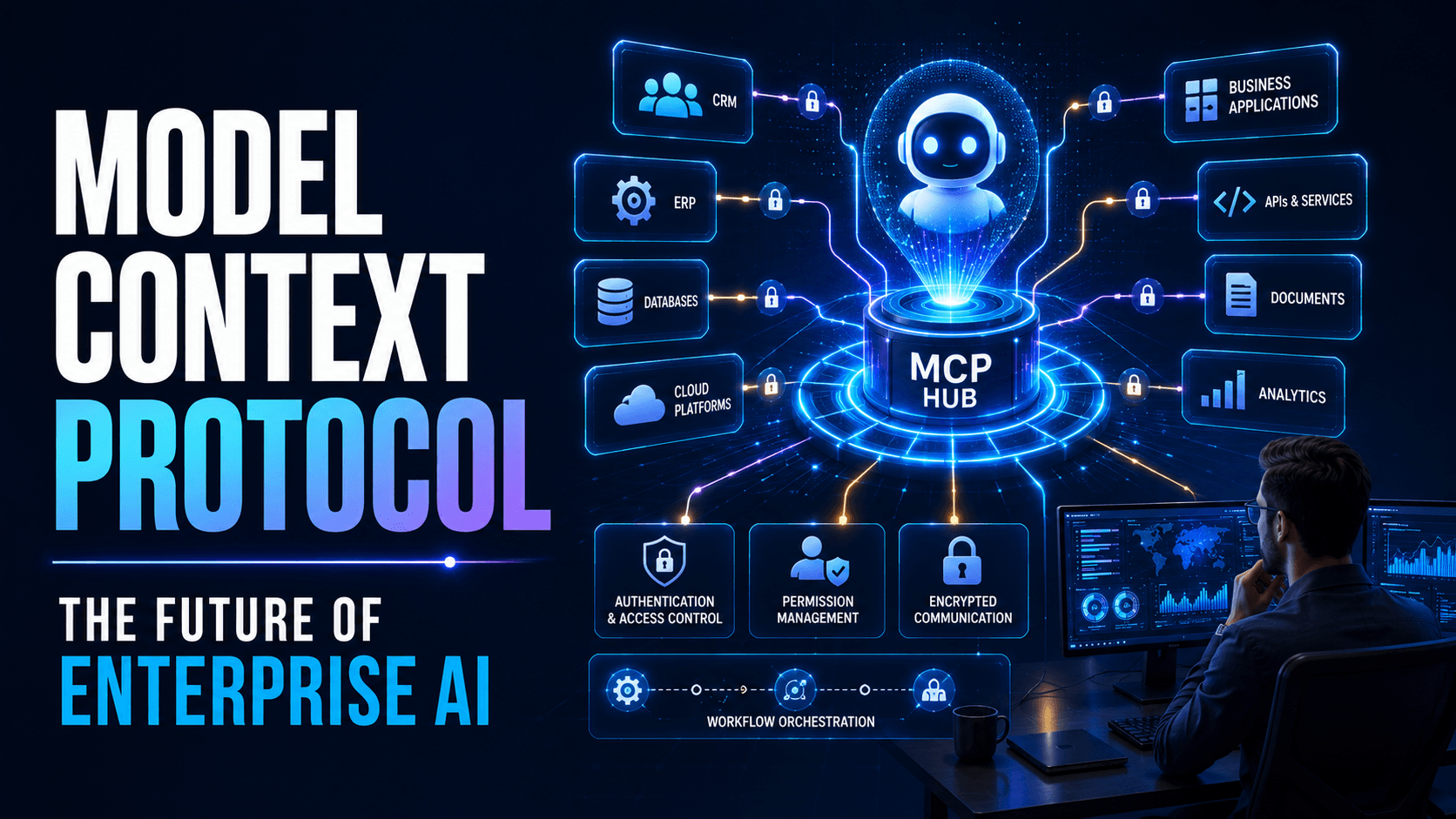
Model Context Protocol (MCP) in 2026: The Future of Enterprise AI Integration
Learn how Model Context Protocol (MCP) enables AI assistants and autonomous agents to securely connect with enterprise tools, APIs and business data in 2026.

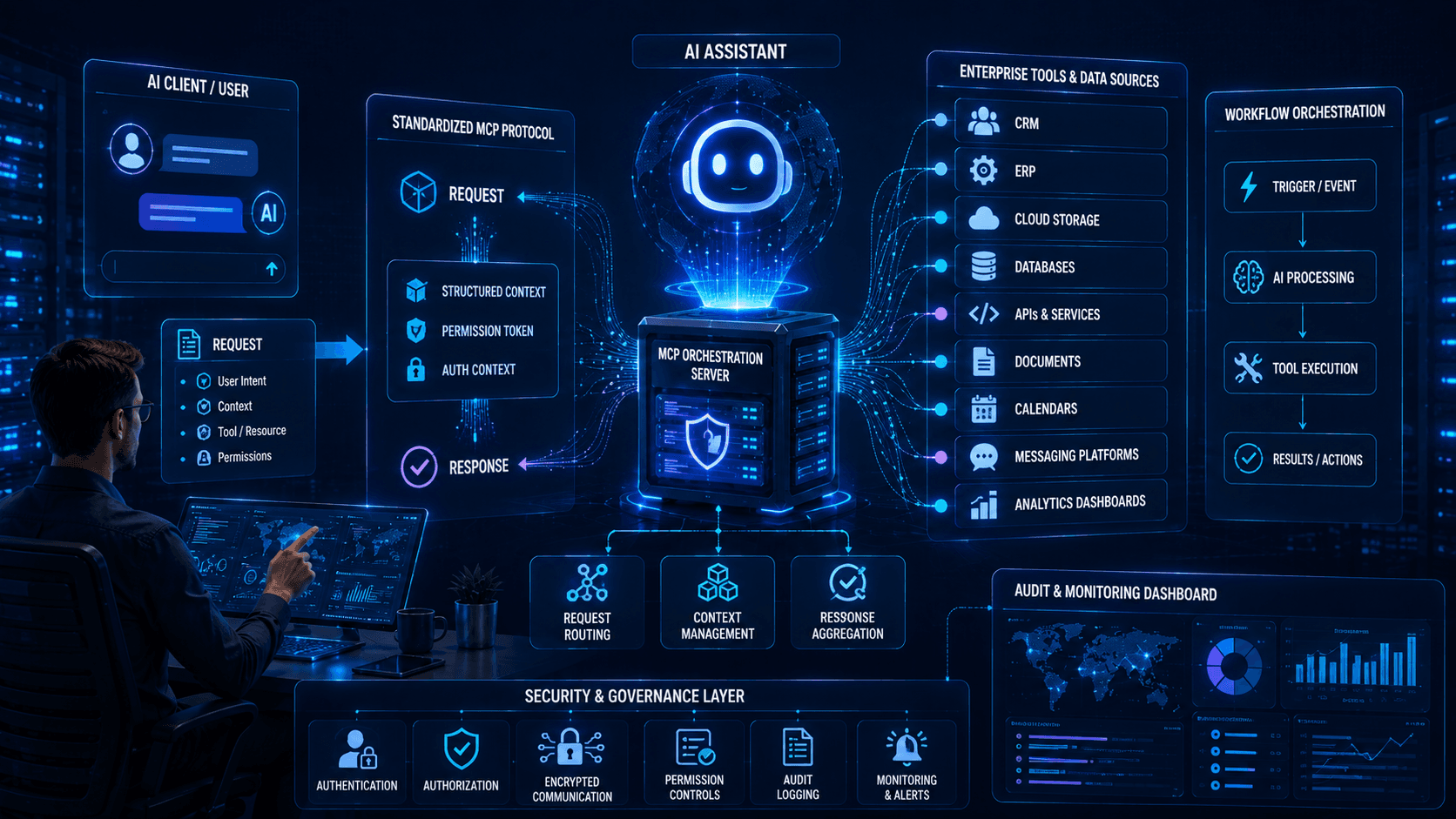
What is Model Context Protocol (MCP)?
Explain MCP in simple business language.
Why MCP Matters in 2026
- AI agents
- Enterprise automation
- Multi-tool workflows
- Secure AI access
- Standardized integrations
How MCP Works
Explain:
- AI Client
- MCP Server
- Business Tools
- APIs
- Resources
- Secure Permissions
MCP vs Traditional API Integrations
Comparison table.
Enterprise Use Cases
- CRM
- ERP
- HR
- Finance
- Customer Support
- DevOps
- Healthcare
- Legal
- Marketing
Benefits
- Faster AI deployment
- Standard integrations
- Lower development cost
- Better security
- Easier maintenance
- Vendor independence
- Better AI reasoning
Security Considerations
- Authentication
- Authorization
- Audit Logs
- Least Privilege
- Human Approval
- Data Governance
Best Practices
- Role-based permissions
- Secret management
- Logging
- Monitoring
- Version control
- MCP server governance
How Arrowhead DigiTech Helps
- AI Agent Development
- Enterprise Automation
- MCP Server Development
- API Integration
- AI Governance
- Cloud Integration
- Custom Software
- Cybersecurity
Final Thoughts
Why MCP could become the "USB-C for Enterprise AI" by standardizing how AI systems connect to business tools.