AI Red Teaming in 2026: How Businesses Can Stress-Test AI Before Attackers Do
AI systems can appear reliable during normal testing while failing under hostile or unexpected conditions. Learn how red teaming exposes hidden weaknesses before customers or attackers find them.

Businesses are rapidly deploying artificial intelligence into customer service, document analysis, software development, finance, healthcare, marketing and internal operations.
Before launch, most teams check whether the system can complete its intended task.
They may confirm that a chatbot answers common questions, an AI assistant retrieves company documents or an autonomous agent successfully updates a business application.
However, ordinary testing usually focuses on expected behaviour.
Real-world users—and potential attackers—do not always interact with AI systems in the expected way.
A customer may submit conflicting instructions. A malicious document may contain hidden directions for the AI. An agent may be persuaded to access an unauthorised tool, reveal confidential information or continue taking actions beyond its approved purpose.
This is where AI red teaming becomes essential.
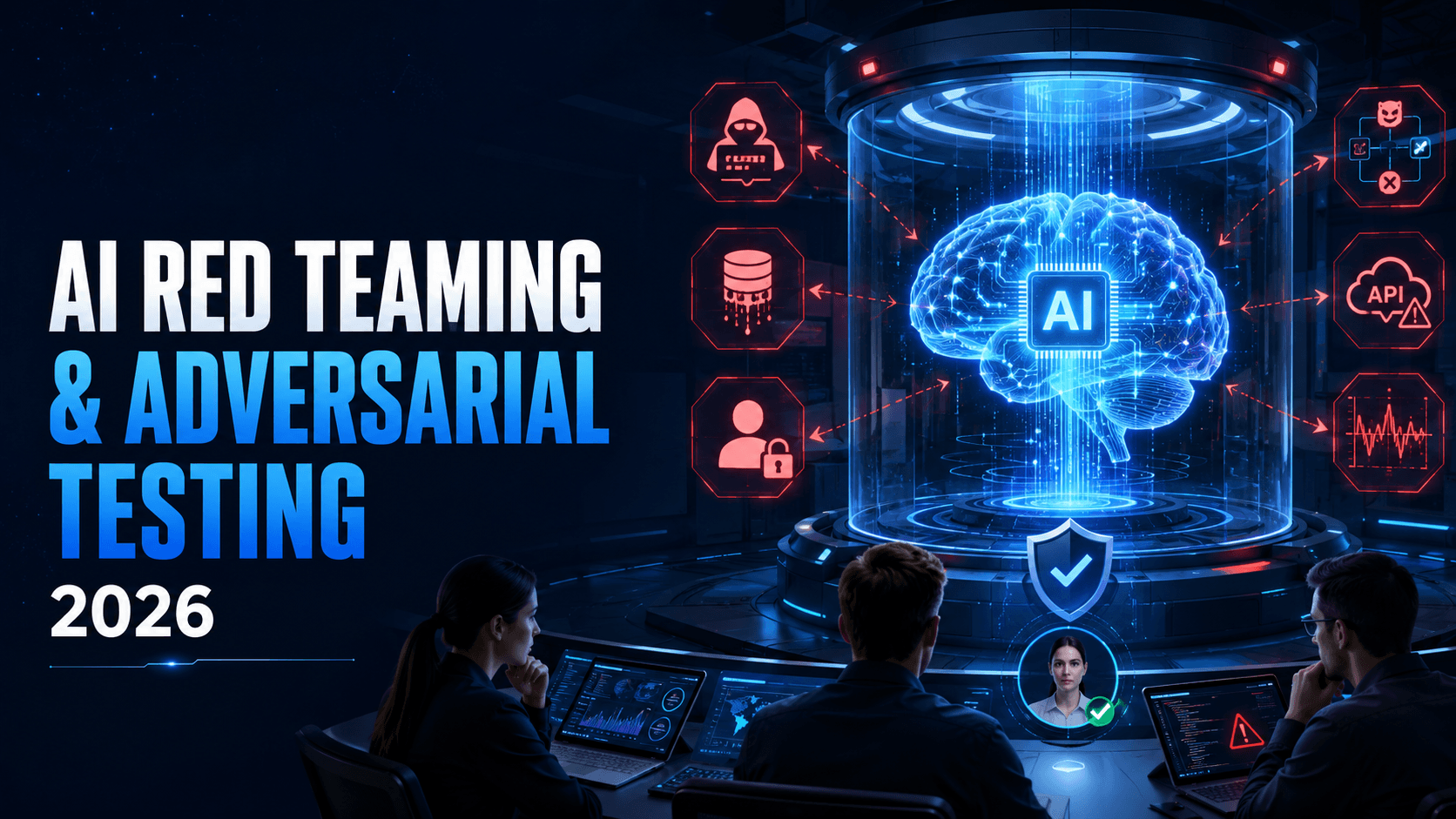
AI red teaming deliberately places an AI system under adversarial, unusual and high-pressure conditions to identify weaknesses before they create customer, security or operational harm.
OWASP describes effective generative-AI red teaming as a holistic process covering model evaluation, implementation testing, infrastructure assessment and runtime behaviour—not simply attempting a few chatbot jailbreaks.
At Arrowhead DigiTech, we help businesses evaluate complete AI applications, including models, prompts, data sources, agents, APIs, permissions and human-approval workflows.
What Is AI Red Teaming?
AI red teaming is a structured security and risk-assessment process in which testers intentionally challenge an AI system.
The testing team behaves like a hostile user, careless employee, compromised integration or unexpected real-world situation.
Its objective is to discover:
- Unsafe model behaviour
- Confidential-data exposure
- Weak system instructions
- Insecure tool access
- Excessive agent permissions
- Unreliable human-approval controls
- Vulnerable APIs and infrastructure
- Failures that appear only after deployment
Traditional quality testing asks:
Can the system complete the task?
AI red teaming asks:
Can the system be manipulated, confused or pushed outside its approved boundaries?
NIST’s AI Risk Management Framework recommends managing AI risk across four connected functions—Govern, Map, Measure and Manage—and treats evaluation as a continuing lifecycle responsibility rather than a one-time launch activity.
Why Normal AI Testing Is Not Enough
During standard testing, developers often use clean documents, predictable questions and authorised workflows.
Production environments are much less controlled.
Users may provide:
- Ambiguous instructions
- Incorrect information
- Extremely long prompts
- Conflicting requests
- Untrusted files
- Unexpected languages
- Manipulated webpages
- Attempts to bypass restrictions
An AI application can technically remain online and return a well-written response while still creating a serious failure.
For example, a customer-service chatbot may reveal internal policy details, an AI document assistant may retrieve files belonging to the wrong department or an autonomous agent may repeatedly call an expensive external service.
NIST’s March 2026 report on deployed AI monitoring explains that AI systems do not always behave in production as expected from smaller testing environments. It identifies post-deployment concerns including hallucinations, security exploits, false claims and models behaving differently when they detect evaluation conditions.
Red teaming helps teams investigate these failure modes before broad deployment and continues supporting monitoring after launch.
Why AI Red Teaming Is Important in 2026
AI applications are becoming more capable and more connected.
Earlier chatbots primarily generated text. Modern AI systems may access databases, call APIs, send messages, update CRM records, operate browsers and delegate tasks to other agents.
This expands the potential impact of a failure.
An inaccurate chatbot response may inconvenience a customer. An agent with access to financial, customer or production systems may perform an inappropriate action.
OWASP’s Top 10 for Agentic Applications 2026 focuses specifically on systems that can plan, act and make decisions across complex workflows. The framework was developed with input from more than 100 industry specialists and provides a practical starting point for securing agentic deployments.
MITRE ATLAS also maintains a living knowledge base of adversary tactics and techniques targeting predictive, generative and agentic AI systems. It helps security teams connect testing scenarios with observed and researched attack behaviour.
NIST’s Center for AI Standards and Innovation highlighted large-scale AI-agent red-teaming competitions in March 2026 as a useful way to assess attacks, defences and emerging agent-security weaknesses.
AI Red Teaming Is More Than Prompt Injection
Prompt injection is important, but it is only one part of the assessment.
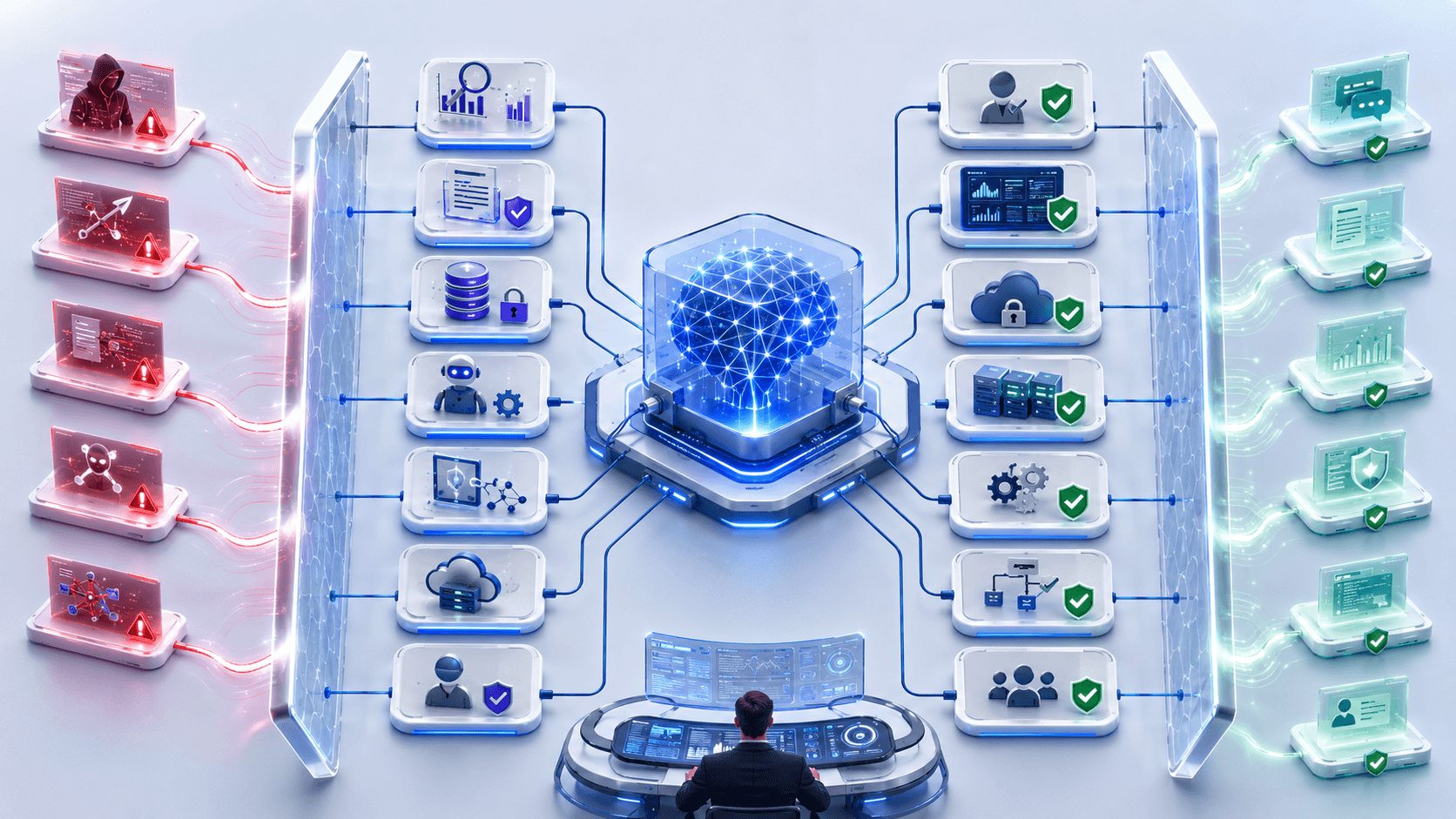
A complete AI system may include:
- A foundation model
- System prompts
- Business rules
- Company documents
- Vector databases
- Cloud infrastructure
- External APIs
- MCP servers
- AI agents
- Authentication
- Human-approval screens
- Monitoring tools
A weakness in any one of these components may affect the complete application.
OWASP’s red-teaming methodology emphasises four broad areas: model evaluation, implementation testing, infrastructure assessment and runtime behaviour.
Businesses should therefore test the complete workflow rather than assessing the model in isolation.
What Should an AI Red Team Test?
Model Behaviour
Testing should examine how the model responds when instructions are ambiguous, conflicting or intentionally manipulative.
The team may evaluate whether the model:
- Follows prohibited instructions
- Produces unsupported claims
- Ignores system policies
- Reveals restricted information
- Generates inconsistent answers
- Fails to express uncertainty
- Continues after it should stop
The objective is not to prove that the model is perfect.
It is to understand where its behaviour becomes unreliable and where additional controls are required.
System Prompts and Guardrails
System prompts define the model’s role, limitations and priorities.
Red teams should evaluate whether user input, retrieved documents or tool responses can override these instructions.
Prompt-based guardrails should not be treated as complete security boundaries.
Critical restrictions should also be enforced through application code, access policies and tool permissions.
Retrieval-Augmented Generation
Many business assistants retrieve documents before answering questions.
Testing should examine whether the system:
- Retrieves unauthorised files
- Uses outdated information
- Accepts malicious document instructions
- Mixes data between customers
- Exposes hidden metadata
- Produces answers unsupported by retrieved sources
A secure model cannot protect documents that are indexed with incorrect permissions.
AI Agent Tool Use
Agentic systems need particularly careful testing because they can perform actions.
The red team should review whether an agent can:
- Select an unauthorised tool
- Repeat an action
- Exceed a spending limit
- Access unnecessary customer data
- Bypass human approval
- Delegate excessive authority
- Continue after the task is complete
- Modify or delete protected information
OWASP’s 2026 guidance explicitly includes tool-calling agents, MCP architectures and multi-agent workflows when evaluating serious AI red-teaming services.
Identity and Permissions
Every important agent and integration should have a distinct identity and limited permissions.
Testing should determine whether:
- Credentials are shared
- API keys appear in prompts or logs
- Tokens remain valid too long
- Development agents can reach production
- One agent can impersonate another
- Permissions exceed the approved business purpose
A successful prompt attack becomes much more dangerous when the compromised agent already has administrator-level access.
APIs and External Integrations
AI applications often depend on several external services.
The assessment should review:
- Authentication
- Input validation
- Rate limits
- Error handling
- Data returned by tools
- External redirects
- Credential storage
- Vendor dependencies
The model may behave appropriately while the surrounding API or plugin remains vulnerable.
Human Approval Controls
A human-approval screen provides limited protection when the reviewer cannot understand the requested action.
Red-team scenarios should confirm that the reviewer can see:
- What action will occur
- Which account or data is affected
- Which agent requested it
- Why the action was recommended
- Whether the request was modified
- What happens after approval
The system should not hide several actions behind one vague confirmation button.
Monitoring and Incident Response
Testing should also examine what happens after suspicious behaviour begins.
The business should be able to:
- Detect unusual agent activity
- Trace the complete workflow
- Suspend a tool connection
- Revoke credentials
- Stop the agent
- Preserve audit evidence
- Escalate to a responsible employee
NIST notes that AI systems have a broad monitoring surface because models operate alongside cloud services, GPUs, tools, classifiers and user interactions.
AI Red Teaming vs. Traditional Penetration Testing
Traditional penetration testing focuses heavily on software, networks, authentication and infrastructure.
AI red teaming includes these areas but also examines model behaviour and human-AI interaction.
Businesses generally need both.
AI red teaming should not replace web-application testing, cloud reviews, dependency scanning or identity security.
AI Red Teaming vs. AI Evaluation
AI evaluation measures whether a system achieves expected quality, safety or performance.
Examples include:
- Accuracy
- Relevance
- Groundedness
- Bias
- Response time
- Task completion
Red teaming is more adversarial.
It deliberately searches for weaknesses that may not appear during normal benchmark testing.
A strong programme combines:
- Standard evaluations
- Adversarial red teaming
- Traditional cybersecurity testing
- Production monitoring
- User feedback
NIST’s human-centred AI evaluation programme has used model testing, red teaming and field testing as separate but complementary measurement layers.
Important Business Risk Scenarios
Confidential Data Leakage
A user may attempt to obtain customer records, system prompts, internal documents or previous conversation details.
Testing should determine whether data separation remains effective across users, departments and connected systems.
Indirect Prompt Injection
A malicious instruction may be embedded inside a document, email, website or database record that the AI later reads.
The user interacting with the agent may never see the hidden instruction.
This risk is especially important for systems that browse external content or automatically process uploaded files.
Excessive Agency
An agent may receive a broad objective but make decisions beyond what the business intended.
Examples include contacting customers, modifying records or making purchases without meaningful approval.
Cost Exhaustion
An attacker or faulty workflow may trigger repeated model calls, external API requests or agent loops.
Cost limits and execution controls should therefore be included in security testing.
False Authority
An AI system may generate professional-sounding legal, financial, medical or policy information without sufficient evidence.
Businesses should test whether high-impact requests are appropriately limited or escalated.
Cross-User Data Exposure
Multi-user AI systems should be tested for situations in which one customer can retrieve another customer’s documents, conversation history or stored context.
Unsafe Multi-Agent Delegation
One agent may transfer a task to another agent with broader permissions.
The red team should verify that delegated authority remains limited and traceable.
What Businesses Should Do Now
1. Build an AI System Inventory
Document every production and pilot AI system.
Include:
- Models
- Data sources
- Prompts
- Tools
- Agents
- APIs
- Business owners
- Technical owners
- Permissions
- Deployment environments
Red teams cannot assess components that the business does not know exist.
2. Define the Threat Model
Identify who may misuse the system and what they may attempt to achieve.
Potential threat actors include:
- External attackers
- Malicious users
- Careless employees
- Compromised vendors
- Untrusted documents
- Misconfigured agents
- Other connected AI systems
Testing scenarios should reflect the business’s real environment rather than generic demonstrations.
3. Classify High-Impact Actions
Identify actions that could affect:
- Money
- Customer accounts
- Production systems
- Employee records
- Healthcare information
- Public communications
- Confidential files
These actions should receive stronger permissions, testing and approval requirements.
4. Test Before Production
Red teaming should begin before the system receives live customer data or operational authority.
Early testing is usually less expensive than redesigning an insecure workflow after launch.
5. Test After Major Changes
A new model, prompt, tool or data source can alter system behaviour.
Repeat important tests after:
- Model upgrades
- New integrations
- Permission changes
- Prompt revisions
- New document sources
- Agent capability expansion
6. Preserve Test Evidence
Record:
- Test objective
- System version
- Input
- Output
- Tool activity
- Severity
- Business impact
- Recommended remediation
- Retest result
This creates evidence that weaknesses were identified and addressed.
7. Connect Red Teaming With Monitoring
Tests should become production-detection rules where practical.
A prompt pattern or agent behaviour identified during red teaming can be monitored after launch.
8. Create a Response Plan
The business should know how to pause the application, revoke credentials and notify responsible personnel when a serious issue appears.
9. Retest Remediation
A guardrail should not be considered successful simply because it was added.
The original scenario and related variations should be tested again.
10. Use Independent Review for High-Risk Systems
Systems handling sensitive or regulated activities may benefit from assessment by specialists who were not responsible for building the application.
Selecting an AI Red-Teaming Provider
Businesses should avoid vendors offering only a short collection of chatbot jailbreak prompts.
OWASP’s 2026 vendor-evaluation guidance recommends examining threat-model quality, testing depth, tooling, governance, reporting and coverage of advanced systems such as RAG, agents, MCP and multi-agent workflows.
A credible provider should explain:
- Which system layers will be tested
- How scenarios match business risk
- Whether manual and automated testing are combined
- How sensitive information will be protected
- How results are prioritised
- Whether remediation will be retested
- Whether agent tools and infrastructure are included
- How evidence will be documented
The provider should also define clear testing boundaries to avoid disrupting production systems or affecting real customers.
AI Red Teaming for Small Businesses
Small businesses do not need an expensive enterprise programme before testing an AI chatbot.
They can begin with a focused assessment.
For a customer-support assistant, priority tests may include:
- Confidential-data requests
- Incorrect policy questions
- Malicious document input
- Cross-customer access
- Human escalation
- Unusual operating cost
- Attempts to override instructions
For an internal AI assistant, the business may focus on document permissions, employee data, external sharing and logging.
The testing programme should expand as the system gains more data access and operational authority.
Common AI Red-Teaming Mistakes
Testing Only the Base Model
The final application includes prompts, data, APIs, agents and infrastructure.
Running Only Jailbreak Prompts
A jailbreak test does not evaluate permissions, cloud configuration or tool misuse.
Testing Without a Threat Model
Generic tests may miss the risks most relevant to the business.
Giving the Red Team No Business Context
Testers need to understand which data, customers and actions are most important.
Ignoring Cost and Availability
An AI attack may aim to increase spending or interrupt service rather than steal information.
Fixing the Prompt but Not the Architecture
Prompt changes cannot reliably compensate for excessive permissions or insecure APIs.
Testing Once and Never Again
AI systems change as models, tools and data sources are updated.
Hiding Results From Business Leadership
Technical findings should be translated into customer, financial and operational impact.
What Arrowhead DigiTech Is Doing
At Arrowhead DigiTech, we help businesses test AI applications as complete production systems.
AI Threat-Modelling Assessments
We identify sensitive data, high-impact actions, user groups, integrations and realistic misuse scenarios.
Generative AI Red Teaming
We assess model behaviour, system prompts, guardrails, document retrieval and unsafe output risks.
AI Agent Security Testing
We review tool selection, permissions, delegation, execution limits and human-approval controls.
RAG and Data-Security Reviews
We evaluate document access, indexing, retrieval permissions, source integrity and cross-user separation.
MCP and API Assessments
We review agent-to-tool connections, server trust, authentication and data exposure.
Cloud and Infrastructure Testing
We assess access controls, secrets, logs, network boundaries and deployment configuration.
AI Observability
We implement traces, alerts and audit records that help businesses detect production issues.
Remediation Support
We improve prompts, permissions, architecture, approval workflows and monitoring based on verified findings.
Secure AI Development
We design custom AI systems with security and testing integrated from the beginning.
Our objective is not to generate the largest possible list of theoretical risks.
We help clients identify realistic weaknesses, prioritise business impact and verify that remediation works.
A Practical AI Red-Teaming Roadmap
Stage One: Discovery
Document the AI system, data, users, integrations and business purpose.
Stage Two: Threat Modelling
Define likely misuse, sensitive assets and high-impact actions.
Stage Three: Adversarial Testing
Test model behaviour, retrieval, agents, APIs, permissions and infrastructure.
Stage Four: Remediation
Improve architecture, guardrails, access and monitoring.
Stage Five: Retesting and Continuous Monitoring
Verify changes and watch for similar behaviour in production.
Final Thoughts
AI systems are becoming too connected and capable to evaluate only through normal user questions.
Businesses need to understand how their AI behaves when instructions are hostile, data is manipulated, tools fail or agents attempt actions outside their intended purpose.
AI red teaming creates this evidence.
It helps businesses discover where the model, application, data, infrastructure and human controls may fail together.
NIST, OWASP and MITRE are continuing to expand AI evaluation, adversarial-testing and threat-knowledge resources as agentic systems become more common.
Arrowhead DigiTech helps organisations apply these principles through AI assessments, secure development, agent testing, cloud reviews and ongoing monitoring.
The right time to discover that an AI agent can bypass a security control is not after it has accessed customer data or performed a production action.
It is during a controlled test—when the business still has time to fix it.
Frequently Asked Questions
What is AI red teaming?
AI red teaming is adversarial testing that deliberately challenges an AI system to uncover security, safety, privacy and operational weaknesses.
Is AI red teaming the same as penetration testing?
No. Penetration testing focuses mainly on technical systems, while AI red teaming also evaluates model behaviour, prompts, retrieved data, agent decisions and human interaction.
What is prompt injection testing?
Prompt injection testing evaluates whether untrusted user or document instructions can override the AI application’s approved rules.
Do AI agents require additional testing?
Yes. Agents may access tools and perform actions, so testing should cover permissions, delegation, retries, human approval and containment controls.
How often should an AI system be red-teamed?
Testing should occur before production and after major changes to models, prompts, data, tools, permissions or architecture.
Can a small business use AI red teaming?
Yes. Small businesses can begin with focused tests for their chatbot, internal assistant or automated workflow.
Does red teaming guarantee that an AI system is secure?
No. It reduces risk by identifying weaknesses, but businesses still need monitoring, access controls, incident response and regular testing.
How can Arrowhead DigiTech help?
Arrowhead DigiTech provides AI threat modelling, red teaming, agent-security testing, RAG reviews, API assessments, cloud security and remediation support.
This article provides general technology and cybersecurit