AI Voice Agent Development in 2026: How Businesses Can Improve Customer Communication
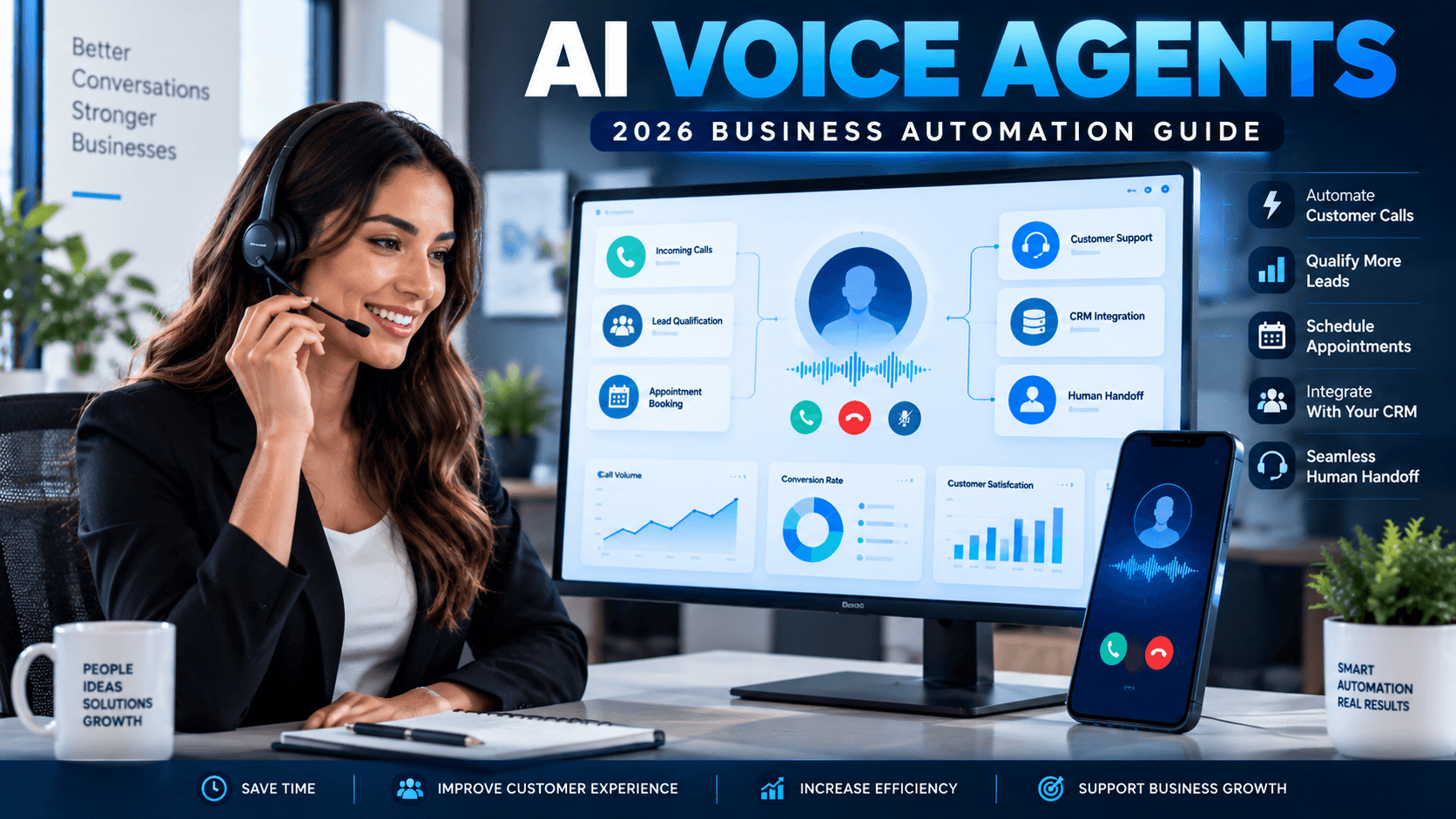
Businesses receive customer calls every day, but handling every enquiry manually can be time-consuming. AI voice agents help automate selected conversations, answer common questions and support businesses in managing customer communication more efficiently.


Customer communication plays an important role in business growth.
Whether a customer wants to ask a question, schedule an appointment, check an order or request information, businesses need a reliable way to respond.
However, managing a high volume of calls can be difficult for small teams and growing companies.
This is where AI voice agent development can offer a practical solution.
AI voice agents use conversational artificial intelligence and voice technology to interact with customers through spoken conversations. When designed correctly, they can support selected customer service, sales and appointment workflows.
What Is an AI Voice Agent?
An AI voice agent is a software system that can communicate with people through voice.
It can be designed to understand spoken questions, provide relevant responses and perform specific actions through connected business systems.
Depending on its configuration, an AI voice agent may help with:
Answering common customer questions
Scheduling appointments
Collecting basic enquiry details
Qualifying leads
Providing business information
Routing calls to human employees
Sending follow-up information
The available capabilities depend on the technology, integrations and business workflow.
Why Voice AI Matters in 2026
Customers often want quick answers without waiting for a response.
Traditional phone support can become challenging when call volumes increase, especially when a business has limited staff or operates outside standard working hours.
AI voice agents can help businesses manage selected routine interactions and provide an additional communication channel.
They are not designed to replace every human conversation. Instead, they can support employees by handling appropriate tasks and transferring more complex situations to human staff.
Automate Repetitive Customer Enquiries
Many businesses receive similar questions repeatedly.
Customers may ask about:
Opening hours
Services
Pricing information
Appointment availability
Delivery details
Location
Basic company information
An AI voice agent can be trained or configured to handle suitable questions using approved business information.
This can reduce repetitive work for employees and help customers access basic information more conveniently.
Improve Lead Qualification
Not every incoming call represents the same type of opportunity.
An AI voice agent can ask predefined questions to collect initial information from potential customers.
For example, a business may want to understand:
What service the customer needs
Their preferred appointment time
Their location
The urgency of the request
Their basic contact information
The collected information can then be passed to a CRM or sales team, depending on the integration.
Appointment Scheduling
Appointment-based businesses can use voice AI to support booking workflows.
Industries that may benefit include:
Healthcare administration
Automotive services
Salons and beauty businesses
Consulting services
Repair companies
Travel and tourism businesses
The voice agent should be connected to an appropriate scheduling system and follow clear rules for availability, confirmation and changes.
Human assistance should remain available when a request is complex or outside the agent's capabilities.
Connect AI Voice Agents With Business Systems
An AI voice agent becomes more useful when it can work with relevant business tools.
Potential integrations may include:
CRM platforms
Appointment calendars
Customer support systems
Business databases
Lead management tools
Notification systems
For example:
Incoming Call → AI Conversation → Lead Details → CRM → Human Follow-Up
This type of workflow can help businesses organize customer information and reduce manual data transfer.
Human Handoff Is Essential
An effective voice AI system should know when to involve a human.
Some situations require empathy, professional judgment, account-specific support or detailed explanations.
A well-designed system can provide a handoff when:
The customer requests a human representative
The question is outside the system's knowledge
The conversation becomes complicated
The customer needs specialized assistance
The system is uncertain about the correct response
Human handoff helps create a more balanced customer experience.
Benefits for Small Businesses
Small businesses often have limited staff and cannot answer every call immediately.
AI voice agents may help by:
Reducing repetitive call handling
Collecting initial customer information
Supporting after-hours enquiries
Improving response consistency
Helping teams prioritize important calls
The technology should be implemented around real business needs rather than used simply because it is new.
Responsible AI Voice Implementation
Voice AI requires careful planning.
Businesses should provide clear information about automated interactions where appropriate and handle customer data responsibly.
Important considerations include:
Privacy and data protection
Secure information handling
Accurate business knowledge
Call recording requirements
Clear escalation processes
Regular system testing
Human support availability
Businesses should also review applicable laws and regulations before deploying voice-based customer communication.
How to Start an AI Voice Agent Project
1. Identify the Use Case
Choose a specific workflow, such as appointment scheduling or common customer enquiries.
2. Define the Conversation
Prepare the questions, responses and situations the agent should handle.
3. Connect Business Tools
Integrate the agent with the relevant CRM, calendar or support system.
4. Test Realistic Scenarios
Test different accents, questions, interruptions and unexpected requests.
5. Add Human Handoff
Create a clear process for transferring conversations to employees.
6. Monitor and Improve
Review customer feedback and system performance to improve the experience over time.
Final Thoughts
AI voice agent development can help businesses create more efficient customer communication workflows.
From handling routine questions to collecting lead information and supporting appointment scheduling, voice AI can reduce repetitive tasks while allowing human teams to focus on more complex customer needs.
In 2026, successful implementation will depend on more than automation.
Businesses should focus on accurate information, responsible data handling, useful integrations and a reliable human handoff process.
FAQs
What is an AI voice agent? An AI voice agent is a software system that communicates with customers through spoken conversations and can perform selected automated tasks.
Can AI voice agents answer customer calls? Yes. They can be configured to handle suitable customer enquiries, provide information and transfer calls when human assistance is needed.
Can an AI voice agent be connected to a CRM? Yes. Depending on the platform and integration, it can send relevant enquiry details and customer information to a CRM.
Can AI voice agents schedule appointments? They can support appointment scheduling when connected to an appropriate calendar or booking system and configured with clear scheduling rules.
Will AI voice agents replace customer service teams? They are best used to support human teams with suitable repetitive tasks. Complex, sensitive or specialized interactions may still require human assistance.